Physical Address
304 North Cardinal St.
Dorchester Center, MA 02124
Physical Address
304 North Cardinal St.
Dorchester Center, MA 02124
Helpful ideas. Squeaky value.
Helpful ideas. Squeaky value.
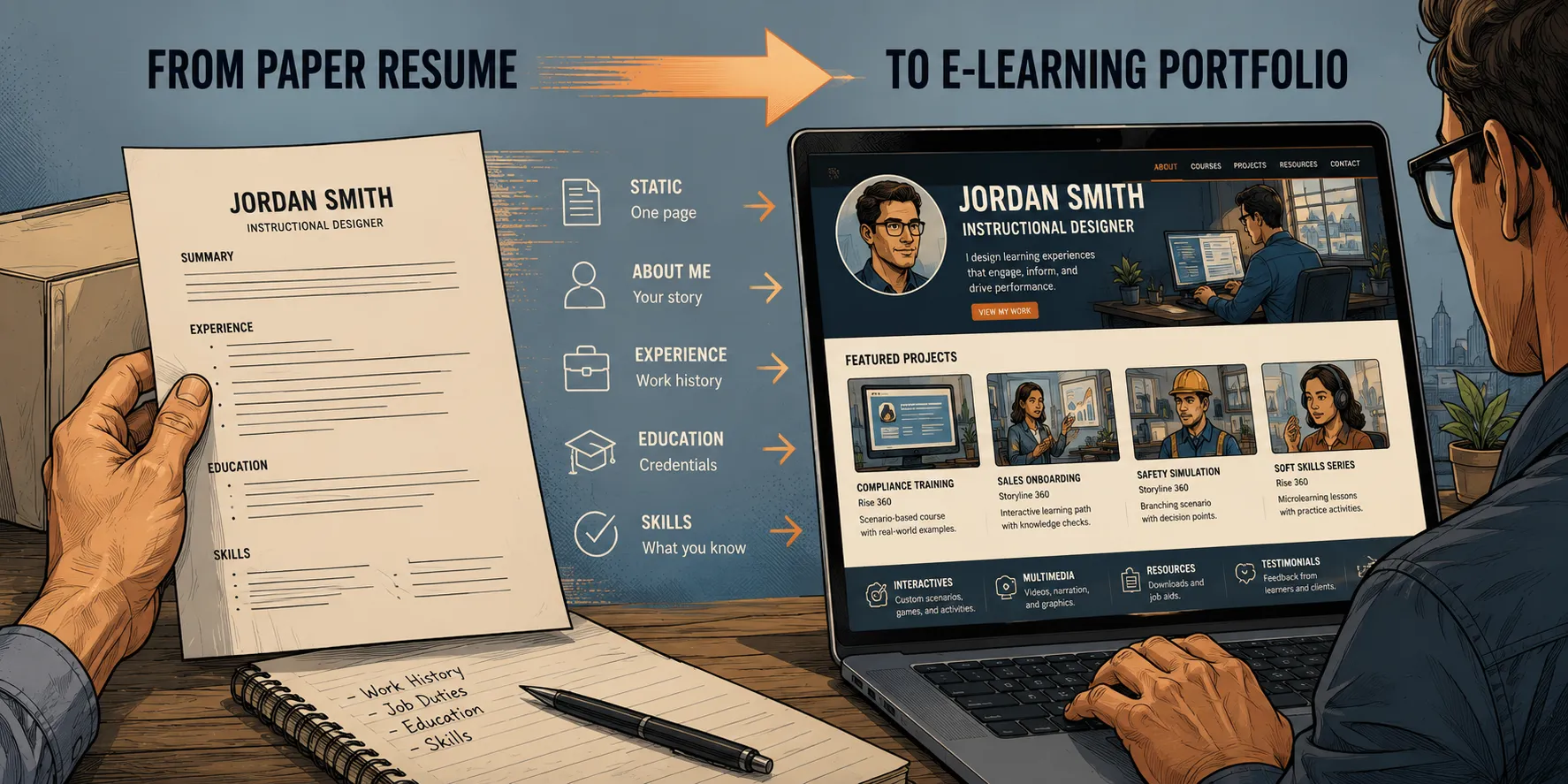
I recently posted a job for the training team. Within days, we had almost 2,000 applicants. I had to quickly screen qualified people. One of my first asks was to see a portfolio so I can assess your skillset.
Only about 20% of the people submitted a portfolio. Many of those who didn’t said they’d subnmit one upon request. With over 2,000 applicants, I wasn’t making special requests. And since I had so many to go through, if there wasn’t a portfolio I automatically rejected them.
Is that fair? Probably not. But there’s no way I was going to look at 2,000 applicants and those who applied, chose not to submit examples of their work. So the way I see it, they weeded themselves out.
Which gets the whole point of this post: you need to maintain an active portfolio. And here’s why.
Talking about your skills is easy. Showing them is what gets you the interview. In a visual field like e-learning, hiring managers want to see actual work. A resume with a list of software tools you’ve used doesn’t tell them much.
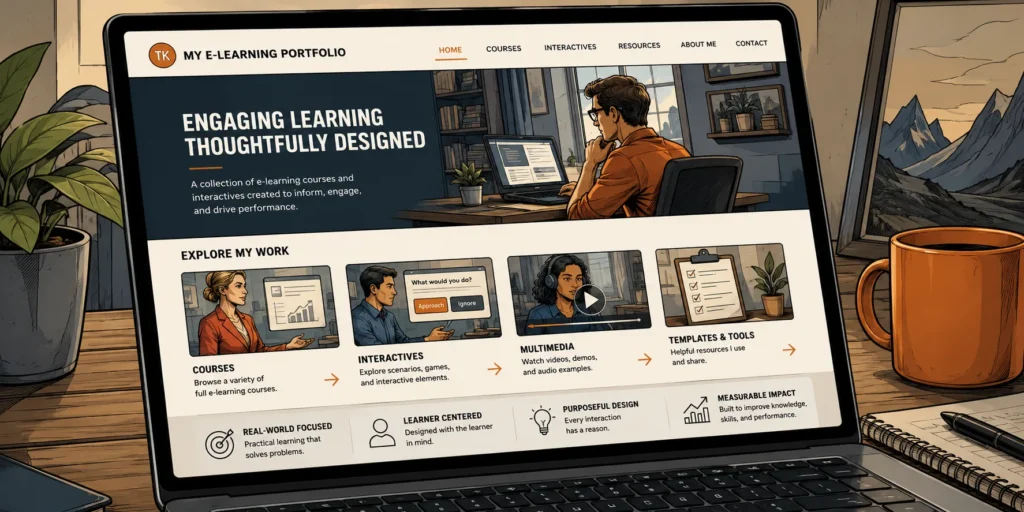
Real client work is the gold standard, but most of us can’t share proprietary courses. Build your own demos instead. A common method is to duplicate the proprietary course and replace it with fake content. Most likely your own personal projects tend to be better anyway. You control what’s in them and can show exactly what you’re capable of. You’re not going to be held back by your organization’s many rules.
Short modules from the weekly e-learning challenges work well for this. They’re quick to build and purpose-made for portfolios. Each one can demonstrate a specific skill: branching scenarios, software simulations, or custom interactions.
Your portfolio isn’t an archive. It’s a curated view of your best and most varied work.
Each piece should answer four questions: Who was the client? What was the problem? What did you build? What changed? A short paragraph or a few bullets is all you need.
A portfolio isn’t just for job searches. Every time you share your work publicly, you build credibility in the community. It’s your way of getting people to know you. And, that job I mentioned above, all of the final candidates ended up being people I had met via the community.
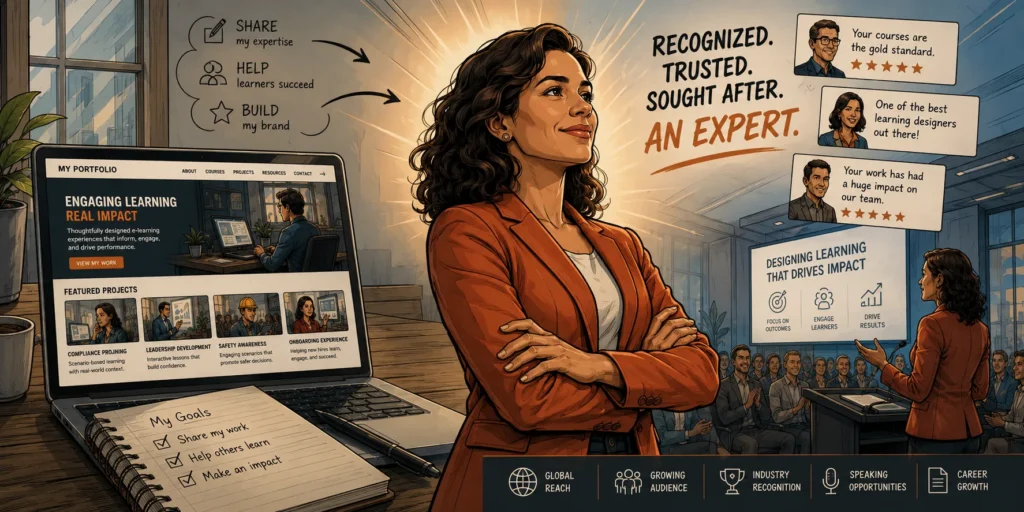
Some of the most recognized names in e-learning built their reputations by sharing freely. They posted templates, shared source files, and showed work in progress. That habit, over time, created real standing.
Being active in a professional community isn’t a marketing strategy. It’s a habit that pays off when you least expect it. And your portfolio is just one way to capture some of your activity and contributions.
A portfolio isn’t something you build once and file away. It’s something you add to over time, piece by piece. Start now while you still have access to the tools and the work. Keep adding new projects, share what you build, and let the community see what you’re capable of. What piece of work could you turn into a portfolio demo this week?
Comments are closed.
[…] come up constantly. The most frequent one is simple: what types of courses should be in it? A portfolio does something a resume can’t. It shows the work, not just a description of […]