Physical Address
304 North Cardinal St.
Dorchester Center, MA 02124
Physical Address
304 North Cardinal St.
Dorchester Center, MA 02124
Helpful ideas. Squeaky value.
Helpful ideas. Squeaky value.
Somewhere along the way, someone decided e-learning should be ranked from one to five. Level one is pure information. Level five is fully interactive with branching scenarios and real decisions. Higher levels are treated as better by default. That’s the hierarchy, and it shapes how most people talk about course quality.
The same logic gets applied to tools. Have a subject matter expert build a course in Rise and it’s automatically low-quality. Use a custom development shop and it must be sophisticated. Neither assumption is right.
Nobody argues that a stout is better than a pilsner. They’re built for different people, different meals, different moments. Judging one against the other by the same standard misses the point. That’s what beer drinkers figured out a long time ago.
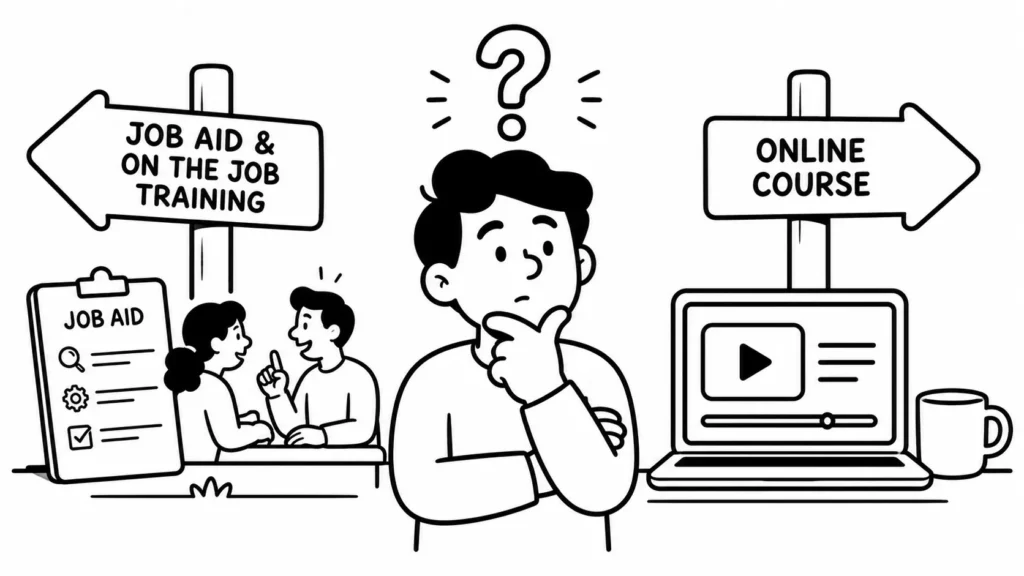
E-learning is the same. A short course that covers three things a new hire needs to know before their first call isn’t a failure. It doesn’t have branching scenarios, and it doesn’t need them. It’s a solution that fits a specific problem. Adding more interactivity doesn’t make it better. It just makes it longer.
The right question isn’t “how interactive is this?” It’s “does it work?” Ultimately, a course works when learners walk away able to do something they couldn’t do before. It also works when it fits the context, the audience, and the goal. Some courses may be heavy on content because the interactive part happens outside the course with a peer coach. The level is a byproduct, not a benchmark.
Before your next project, try this: describe what the learner should be able to do when it’s done. Not just know. Do. Let that answer drive every design decision. If the course delivers on that, does the interactivity level even come up?