Physical Address
304 North Cardinal St.
Dorchester Center, MA 02124
Physical Address
304 North Cardinal St.
Dorchester Center, MA 02124
Helpful ideas. Squeaky value.
Helpful ideas. Squeaky value.
Most designers treat a portfolio as something to build when they’re looking for work. But that’s too late to start. Your portfolio does more than help you land a job.
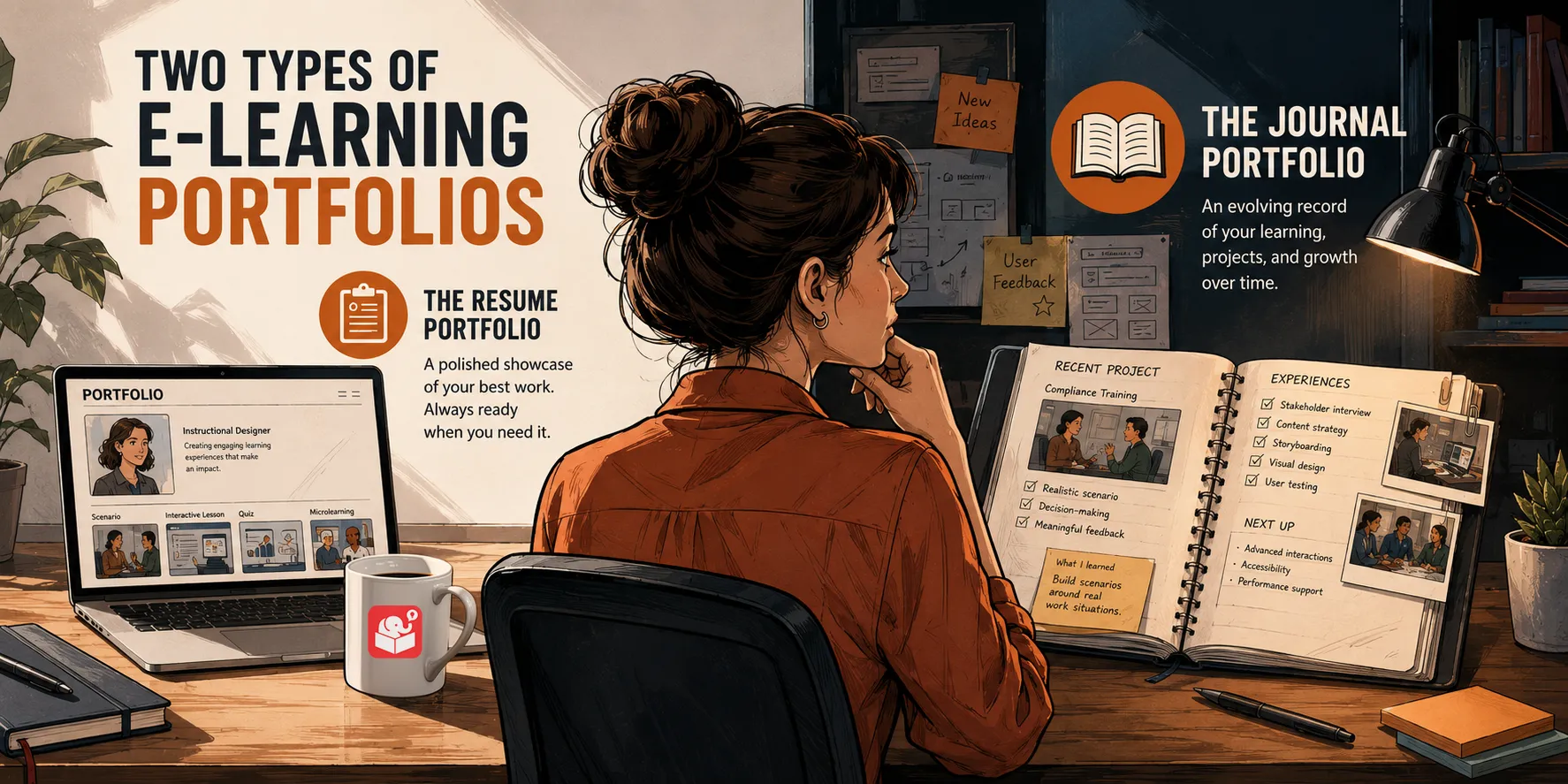
At its core, a portfolio shows your skills and thinking. For some people, it’s a curated set of best work they rarely touch. For others, it’s a living record of projects and learning. During the planning stage, decide which of those you actually want to build.
A static portfolio is your professional highlight reel. You build it once, update it once or twice a year, and let it represent your best work. Think of it as a business card rather than a blog.
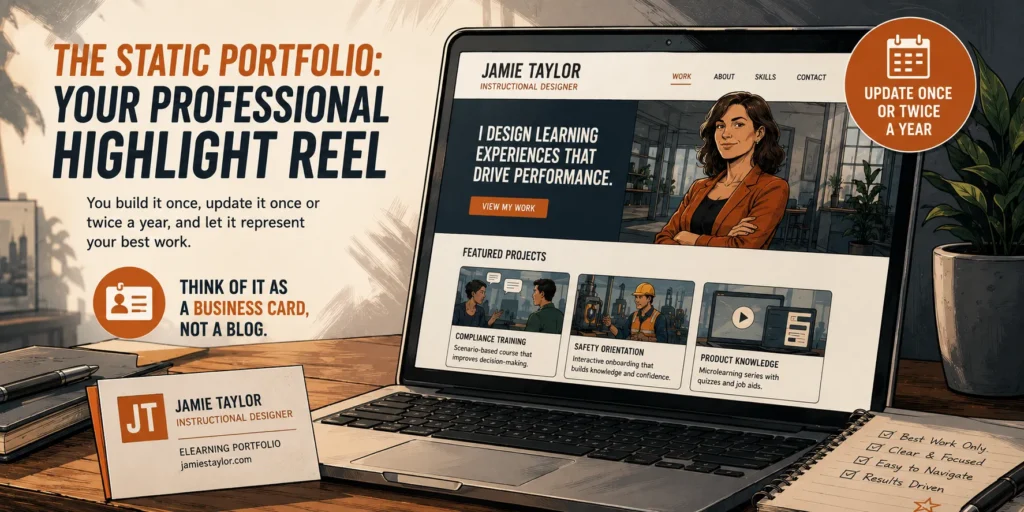
When building a static portfolio, focus on quality over quantity. Here’s what to include.
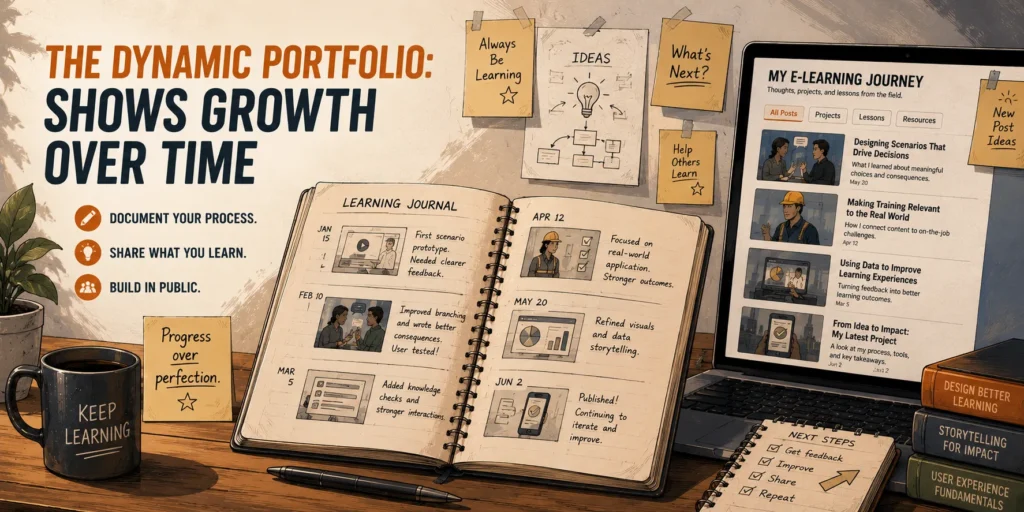
A dynamic portfolio shows growth over time. You’re documenting your process, sharing what you learn, and building in public. It takes more upkeep than a static portfolio, but the payoff is different. Here are some habits that make it sustainable.
Whether you’re actively job hunting or building for your own growth, a portfolio is worth the effort.
The portfolio you build today doesn’t have to be the portfolio you keep forever. Start with whatever format fits your current situation and let it evolve. The instructional designers with the strongest careers tend to show their work consistently, even when they’re not job hunting.
Ask yourself: What would it take for you to start or refresh yours this month?