Physical Address
304 North Cardinal St.
Dorchester Center, MA 02124
Physical Address
304 North Cardinal St.
Dorchester Center, MA 02124
Helpful ideas. Squeaky value.
Helpful ideas. Squeaky value.

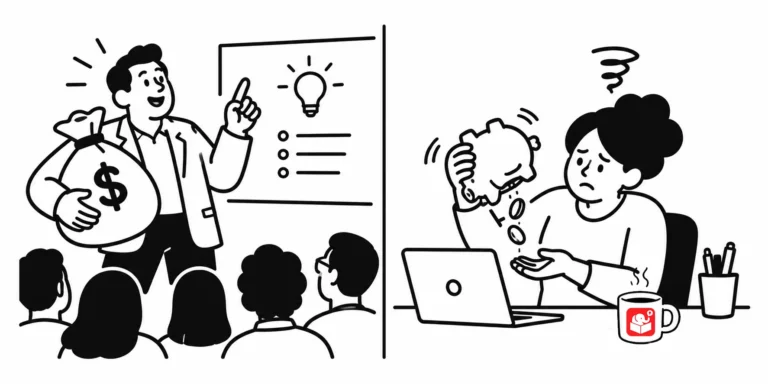
A manager emails with a training request. On the surface It sounds clear enough. But organizations always default to more training to fix problems. But we know the real problem is usually buried under assumptions about what a course can fix. Your job is to build what works, not just what the client asked for.
Like I said, training is often the default solution. But not every performance gap is a training problem. Sometimes people know exactly what to do but something else is blocking them. That’s where you need to put on the performance consulting hat.
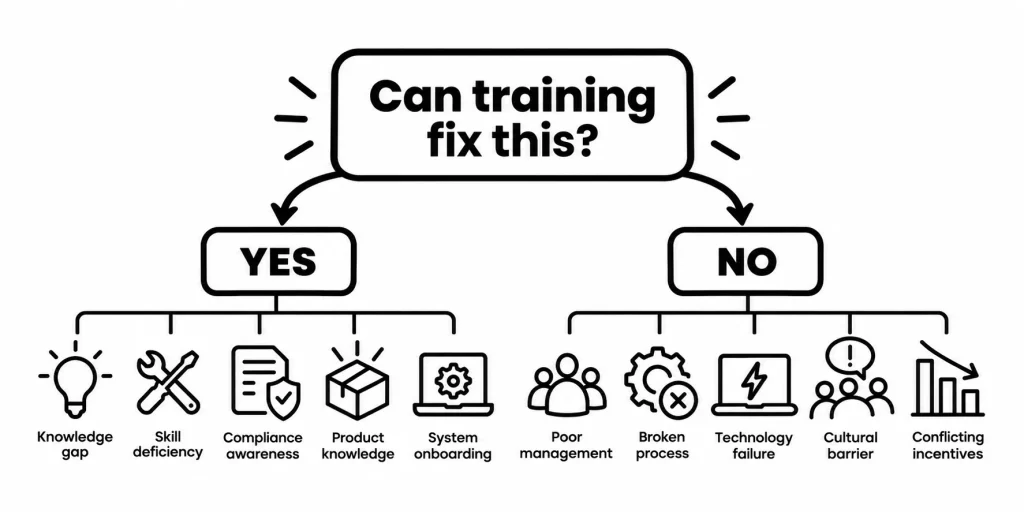
Ask what the learner is currently doing and why they’re not reaching the desired outcome. A course only helps when the gap is a knowledge or skill problem.
Once training is confirmed as the right path, document exactly what you’ll deliver and when. A simple service level agreement works well here. It captures scope, timeline, and success criteria before the work begins.
When the project drifts, you have something to point to.
A course without a measurable objective is just content. Write out what learners need to do after the training.
Determine how to assess that inside the course and track it in the real world. Connect with whoever owns the performance data so your results have context.
Courses cost money to build. They also cost money to take, since they pull people from productive work. Keep that value calculation in mind as you make decisions about scope and design. Your client is investing real resources, and your job is to protect that investment.
Make your client look good along the way. When they’re your subject matter expert, acknowledge their contribution. Let their manager know they helped build something useful. That goodwill keeps the relationship strong for the next project.
Do what you can to deliver ahead of schedule. Scope creep is the biggest threat to on-time delivery. The other is trying to build more than is required for the course objectives. A compliance course that only requires completion probably doesn’t need a complex interactive scenario.
A solid service level agreement limits what gets added mid-project.
After you deliver, walk your client through the original agreement and get their sign-off. Courses can fail when the wrong solution was asked for, and the blame sometimes falls on the training team. Closing out formally creates a clear record of what was agreed and what was delivered.
The course designer’s real value isn’t in building slides of content. It’s in asking better questions before the work starts. When you treat every project as a consulting engagement, better outcomes follow. Try that approach on your next request and see what changes.