Physical Address
304 North Cardinal St.
Dorchester Center, MA 02124
Physical Address
304 North Cardinal St.
Dorchester Center, MA 02124
Helpful ideas. Squeaky value.
Helpful ideas. Squeaky value.
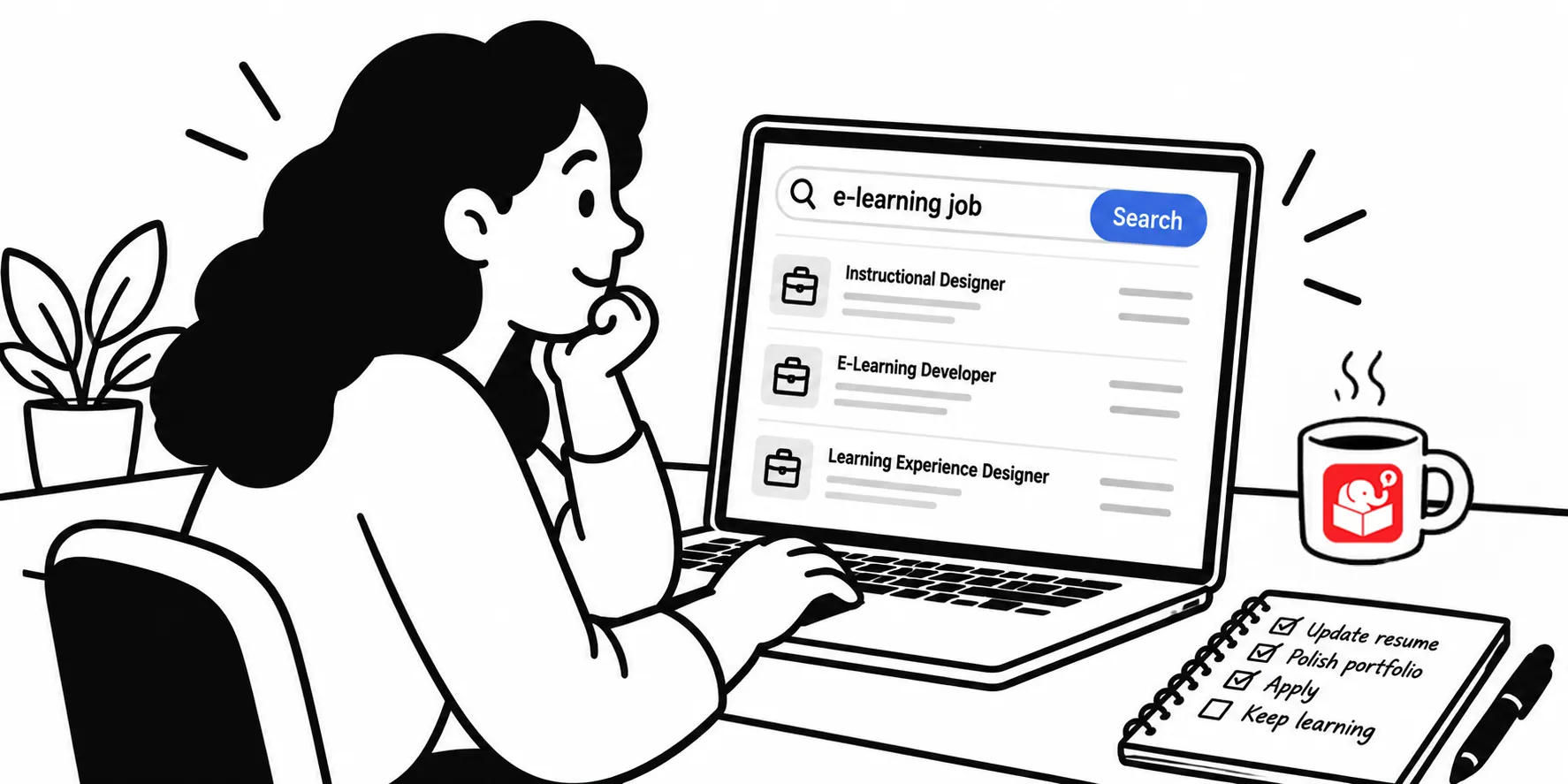
A few years ago, the e-learning industry was still small enough that almost anyone with basic skills could get a foot in the door. That’s changed. The field is growing fast, and the people landing jobs are the ones who’ve done the work before they ever apply.
On top of that, AI is putting pressure on e-learning teams to prove that they can do more than restructure content. So you want to develop skills and be in a position to demonstrate them.
Whether you’re looking outside your company or trying to move up inside it, someone else wants the same job. Most people don’t like thinking of their career as a competition, but it shapes how you prepare. The person who gets hired usually has more proof of their skills, not just more enthusiasm.
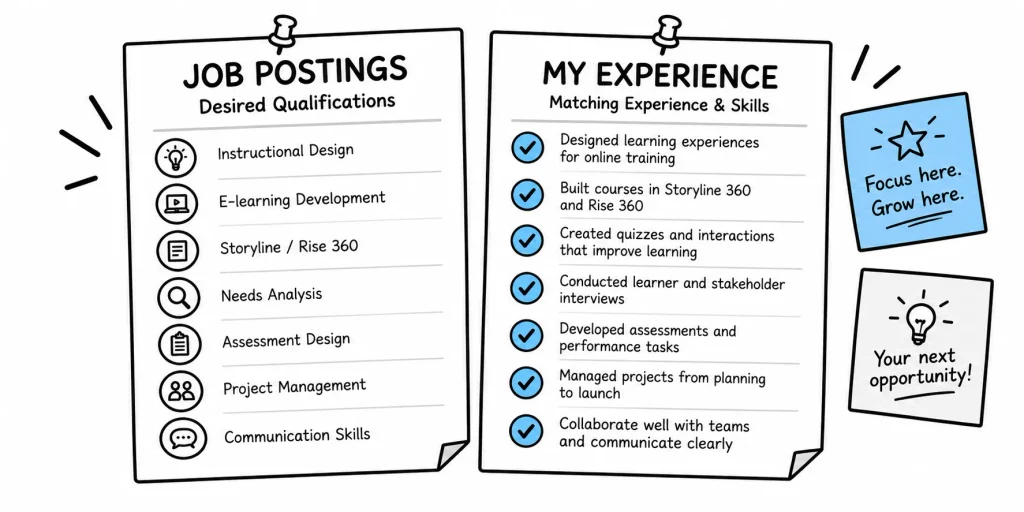
You don’t have to be the most experienced person in the room but you do have to show what you can do. Start by looking at job postings or talking to people in roles you want. Write down what skills they require. If you can’t point to examples of those skills in your work, you know where to focus next.
I’ll also let you in on a secret: most people don’t have e-learning portfolios so when an opportunity presents itself they are already starting behind everyone who does.
Many organizations give developers plenty of work, but it’s often the same project over and over. You might build a hundred courses, but if they’re all compliance click-throughs, you haven’t grown much. Variety matters more than volume.
Look for ways to stretch outside your daily work. Build practice modules that test a skill you haven’t used yet. Try a scenario-based course, a screen recording tutorial, or a soft-skills interaction. Keep them short and focused. Clean them up and add them to your portfolio.
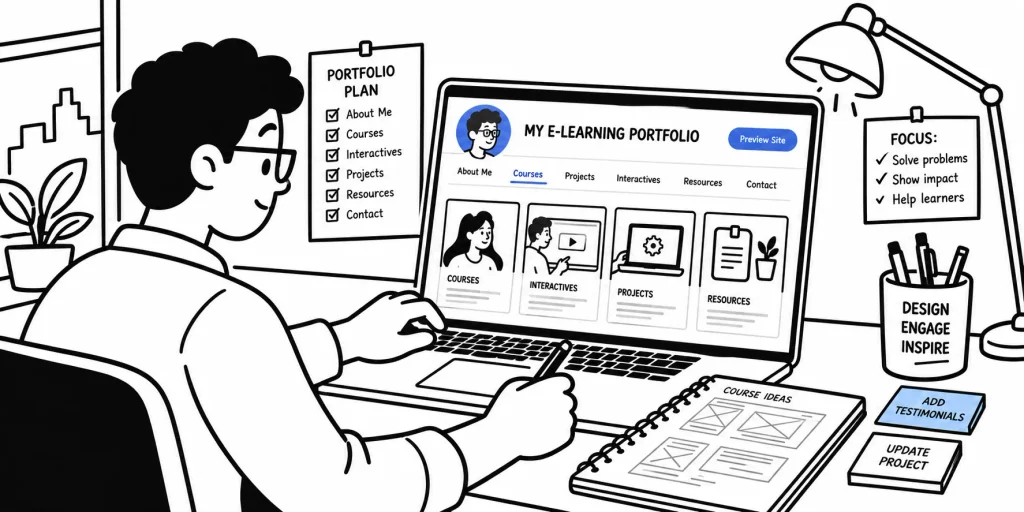
You don’t need a public website to start. A well-organized folder of samples with short descriptions works fine. Think of it as evidence. Each piece should show what the challenge was, what you did, and what the result was.
If your real work is confidential, strip the proprietary content and replace it with something neutral. Pull out the parts that show design decisions, not just the final product. Employers want to see how you think, not just what the output looks like.
Here’s a simple three-part structure for each portfolio piece:
Most people in professional communities are lurkers. They read and collect but never post or respond. That’s fine up to a point, but the people who benefit most are the ones who show up consistently.
Answering questions in the Articulate community costs almost nothing. Make it a habit to help a few people each week. Over time, that builds a reputation. When positions open up, community connections can give you a real advantage over an unknown applicant.
You don’t need decades of experience to be useful to others. If you’ve figured out something practical, share it. Write about it. Record a short tutorial. Post a sample that shows a technique.
A few ways to build your reputation:
Each of those things helps someone else, and it positions you as someone who contributes rather than just consumes.
If your current job doesn’t give you the kind of work you need for your portfolio, look elsewhere. Community organizations, nonprofits, and local groups often need training and have no budget for it. Offer to build something for them.
Volunteering gives you real projects with real constraints. That’s far more compelling in a portfolio than practice modules you built alone. Plus, you never know where a connection will lead.
Formal degrees still matter in job searches. They’re one of the filters employers use, especially when a role gets dozens of applications. If you can pursue a degree or certification program, it’s worth considering.
If you can’t, focus harder on your portfolio. A strong body of work with documented results can outweigh credentials in many situations. Keep reading, keep learning, and keep building.
The e-learning field is full of opportunity, but opportunity doesn’t come to people who wait. The habits that matter most, building diverse skills, maintaining a portfolio, and staying connected with the community, compound over time.
Start small, stay consistent, and the work you do today makes it much easier to say yes when the right job appears.