Physical Address
304 North Cardinal St.
Dorchester Center, MA 02124
Physical Address
304 North Cardinal St.
Dorchester Center, MA 02124
Helpful ideas. Squeaky value.
Helpful ideas. Squeaky value.
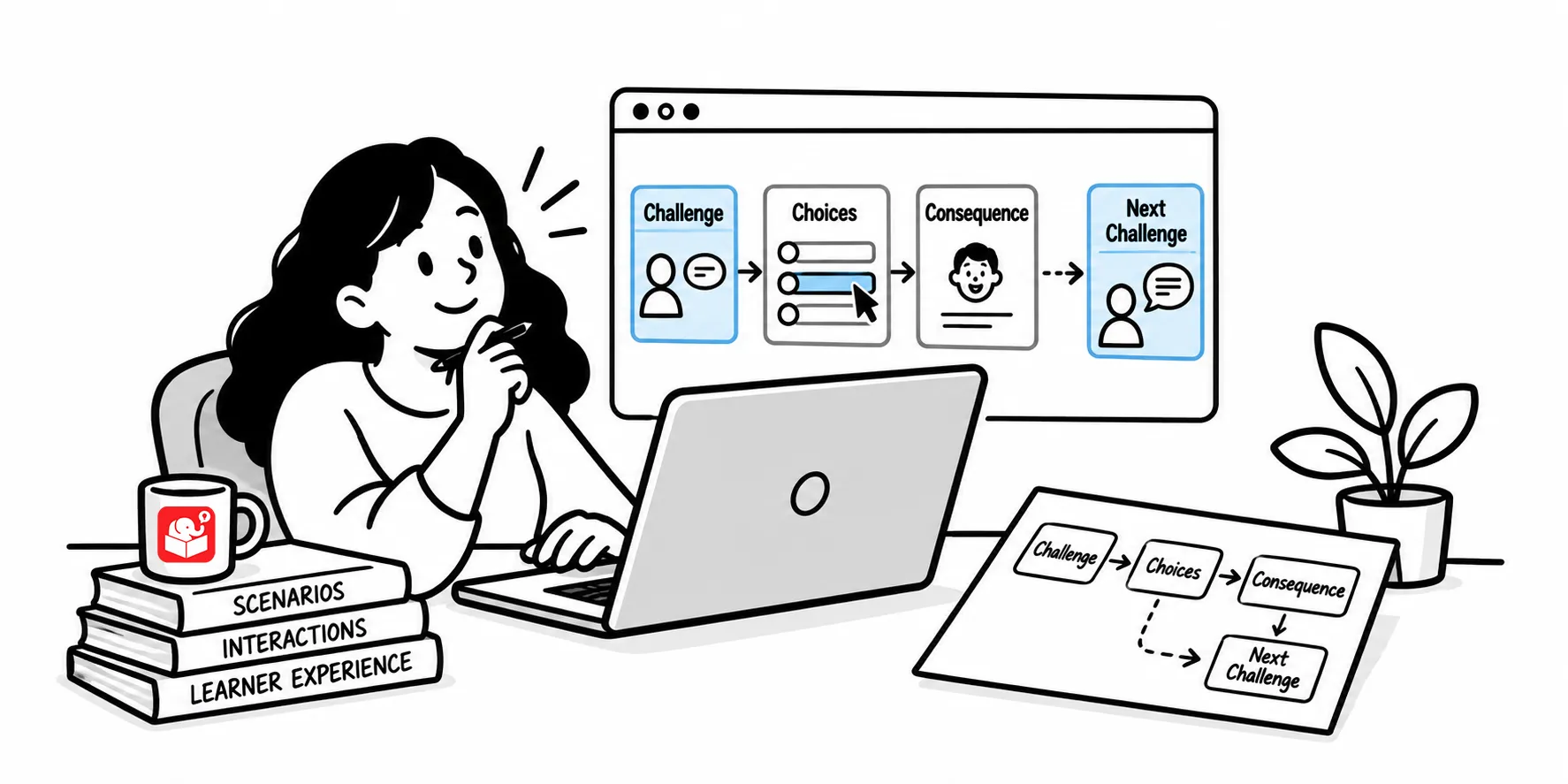
About 25 years ago I created the 3C model as a simple way to help my customers and junior instructional designers understand decision-making scenarios. All performance-based training hinges on a learner being confronted with a situation where their understanding is challenged. They have to make a decision, so the course designer presents some choices. And then each choice presents a consequence.
Every branched scenario I build follows the same structure: a challenge, some choices, and the consequences of those choices. The challenge presents a situation and asks the learner to make a decision. The choices are the options they can select. The consequence is what happens based on what they chose, and where they go from there.
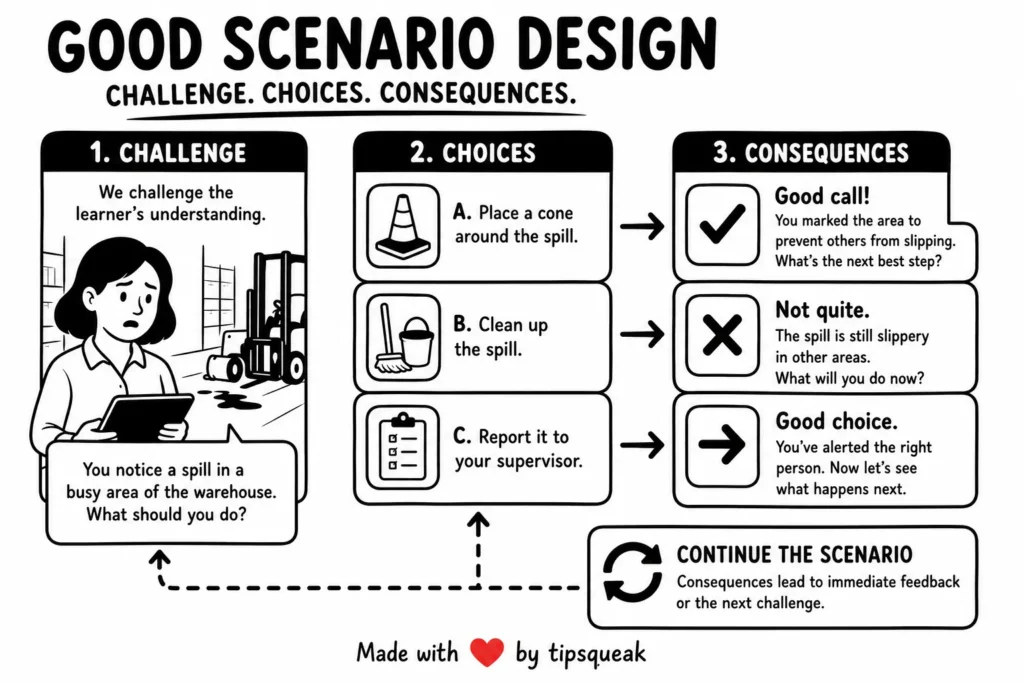
Pre-building generic 3C templates is the real time-saver. You can do this in Storyline and save as a template. You can also do it in Rise by using the Scenario app or combining blocks and saving as a template.
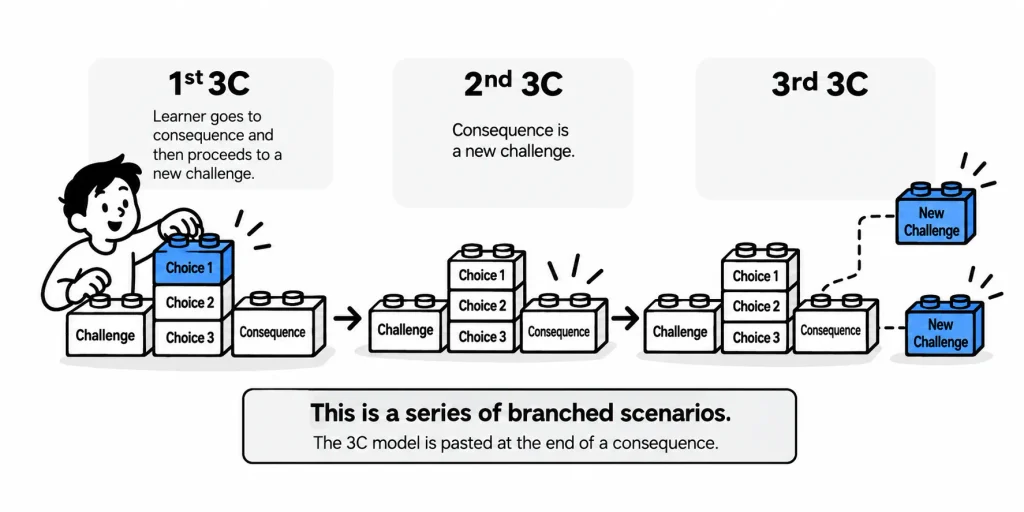
The 3C model gets more powerful when you chain templates together. The consequence of one scenario flows directly into the challenge for the next. This is how you build a longer branched sequence without it getting overwhelming. Each link in the chain follows the same simple structure.
You can also use the consequence slide as a sorting mechanism. If the learner gets it right, move them forward. If not, send them down a path with more information before they try again. This works for both formative practice and actual course navigation.
A branched scenario is only worth building if the decision matters. If the learning can be said in a sentence, say it. Build branching when the learner needs to practice real decisions, not to make the course feel interactive.
Used well, the 3C model can sort learners by what they already know. It can give them a safe place to practice judgment. It can even turn a linear course into something that feels like a story. Keep each branch to two or three choices. More than four gets exponentially complex, and learners get lost and it’s probably a challenge to get your subject matter experts to add more complexity.
Before your next project, pre-build a simple library of 3C templates. One two-choice, one three-choice, one four-choice. When a scenario fits your content, drop in the right template and replace the placeholders. That’s the whole workflow.
Originally published: July 14, 2009