Physical Address
304 North Cardinal St.
Dorchester Center, MA 02124
Physical Address
304 North Cardinal St.
Dorchester Center, MA 02124
Helpful ideas. Squeaky value.
Helpful ideas. Squeaky value.
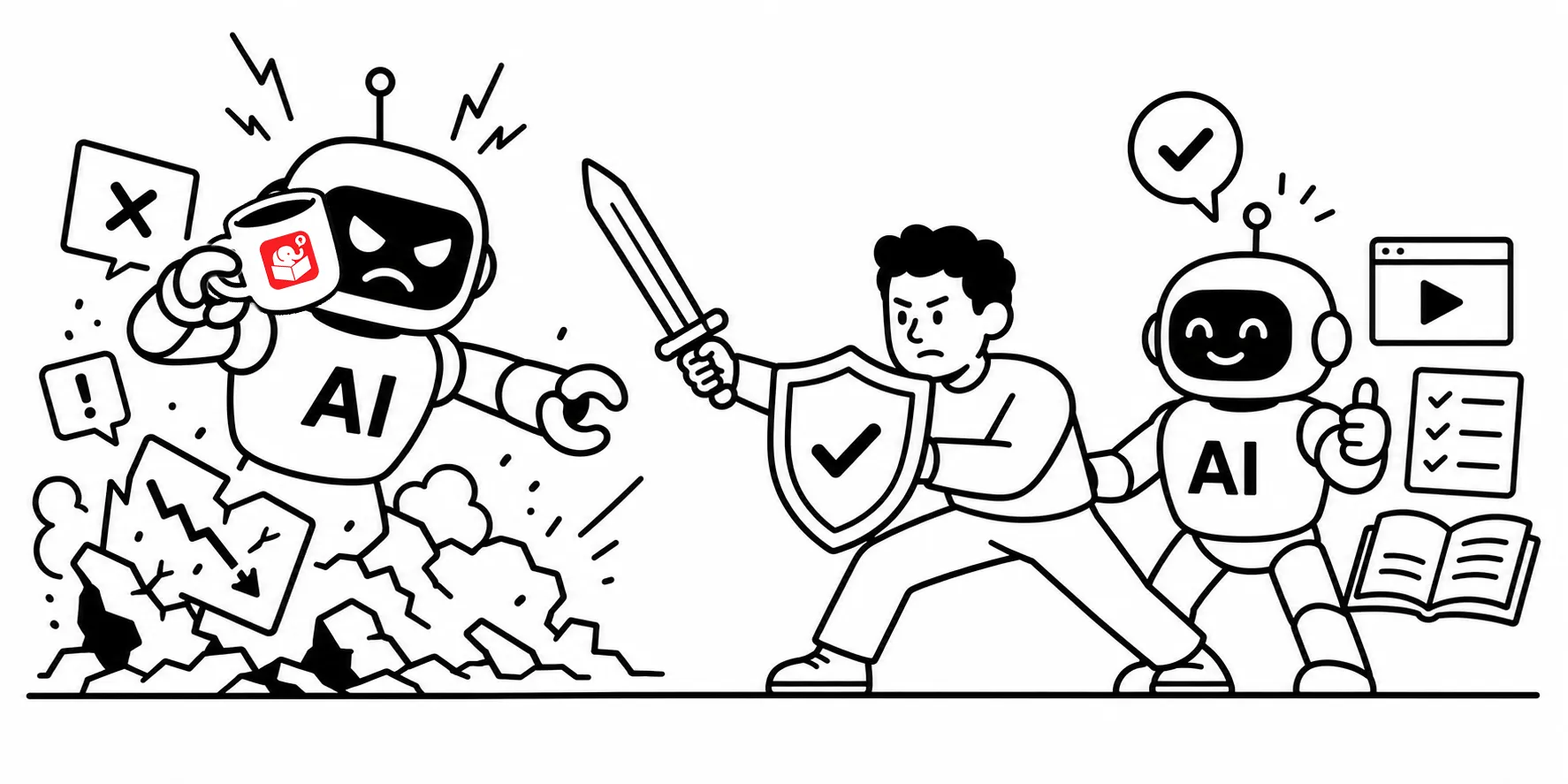
AI continues to evolve so we can look at where it sits currently, yet anticipate where it may go. As it is currently, AI isn’t going to replace good instructional design. But it’s already changing what’s practical for a small team or a solo developer. Knowing where it actually helps (and where it doesn’t ) is what separates people who use it well from people who just produce more of the same, faster.
The most immediate value is on the production side. Things that used to take hours now take minutes.
Need a first draft of a script? AI handles that. Want to turn a dense SME document into something a learner can actually read? AI can restructure it, simplify the language, and surface the key points worth keeping. It won’t always get it right, but it gives you something to react to instead of a blank page. I find that I usually get about 80% of what I need. To me one of the biggest helps is that I can dump all of my content into a bucket, set some parameters in a prompt, and get a really good starting point.
The one place that I think it really adds value is the graphic design and visuals. A lot of e-learning developers have no budget for a graphic designer and no illustration skills of their own. That used to mean settling for generic stock images that never quite fit the course. AI image generators have changed that. You can prompt a specific character, a workplace scene, or a custom illustration and get something usable in a few minutes. It’s not perfect but it’s a capability most developers didn’t have before. I am not going to lament using AI to create my graphics. I am not putting a graphic designer out of work, because I wouldn’t have hired one anyway. And the result is that my courses are more professional visually.
AI is also useful when you’re working with a SME. A subject matter expert usually gives you more content than you need, organized around how they think about the topic rather than how a learner needs to experience it. AI can help you take that raw material and restructure it around learning objectives. It can flag where the content is just information versus where there’s an actual performance goal hiding in there. That kind of analysis used to take a lot of time. AI speeds it up.
Here’s the part I think where we need to be careful. AI creates content.
The output can look really good. That’s part of the problem. AI can generate a polished, coherent, well-formatted course outline or a full script with barely any effort. And because it looks credible, it’s easy to assume it’s right.
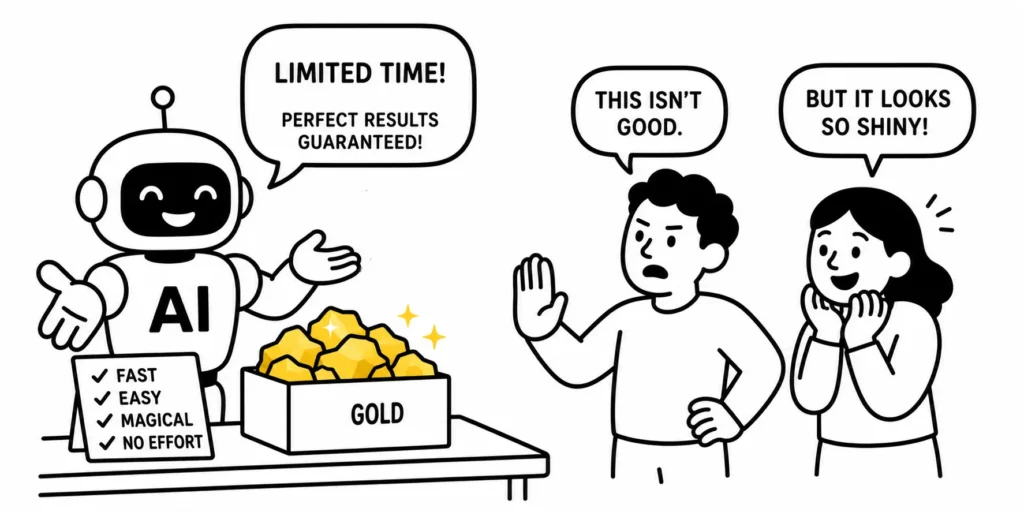
It’s not always right or more likely, it’s not always deep enough. AI pulls from patterns, not from the specific context of your learners, your organization, or the actual performance problem you’re trying to solve.
I think of it as fool’s gold. The volume and polish create the appearance of value. But a content dump is still a content dump whether a person wrote it or AI did. If you hand AI a pile of information and ask it to turn it into a course, you’ll get a pile of information formatted to look like a course. That’s not the same thing as training.
The other risk is generic content. AI defaults to the middle. It writes for a general audience, uses general examples, and makes general points. That might be fine for some topics. But if your course needs to feel specific to your learners’ world, AI’s first draft probably won’t get you there without real editing.
Of course, with all those criticisms we should recognize that AI is evolving, so what is true now, won’t be true later. And with generic prompts, like a “build a course” you’ll get generic content. But with more detailed prompts with specific goals and guidance, you’ll get better output.
Your job isn’t to prompt AI and publish what comes out. Your job is to know what good looks like and push the output until it gets there. Thisa requires a solid understanding of your objectives, how they’re measured, and what it takes to get there. It also means knowing instructional design, so that you can recognize fool’s gold when you see it.
That means reviewing everything AI produces with the same scrutiny you’d apply to a SME’s first draft. Check whether the objectives are real performance goals or just awareness statements. Check whether the scenarios reflect how your learners actually work. Check whether the feedback is meaningful or just correct and incorrect. AI won’t catch any of that on its own.
The developers who get the most out of AI are the ones who treat it like a fast but inexperienced assistant. I get frustrated with AI. It’s like working with a drunk smart person. It can produce a lot, quickly. But it needs direction, it needs review, and it needs someone who understands instructional design to shape what it generates into something that actually works.
Over time, I think AI will do more than speed up production. Personalization at scale, courses that adapt based on how someone performs, content that updates without a full rebuild every time something changes. We’re not all the way there yet. But the direction is clear.
Start using AI where it saves you the most time without requiring much judgment — drafting scripts, restructuring SME content, generating visuals. Build from there as you get a feel for what the tools do well. But keep your instructional design instincts sharp. The goal is better courses faster, not just more courses. What’s one part of your production process where you think AI could help most?