Physical Address
304 North Cardinal St.
Dorchester Center, MA 02124
Physical Address
304 North Cardinal St.
Dorchester Center, MA 02124
Helpful ideas. Squeaky value.
Helpful ideas. Squeaky value.
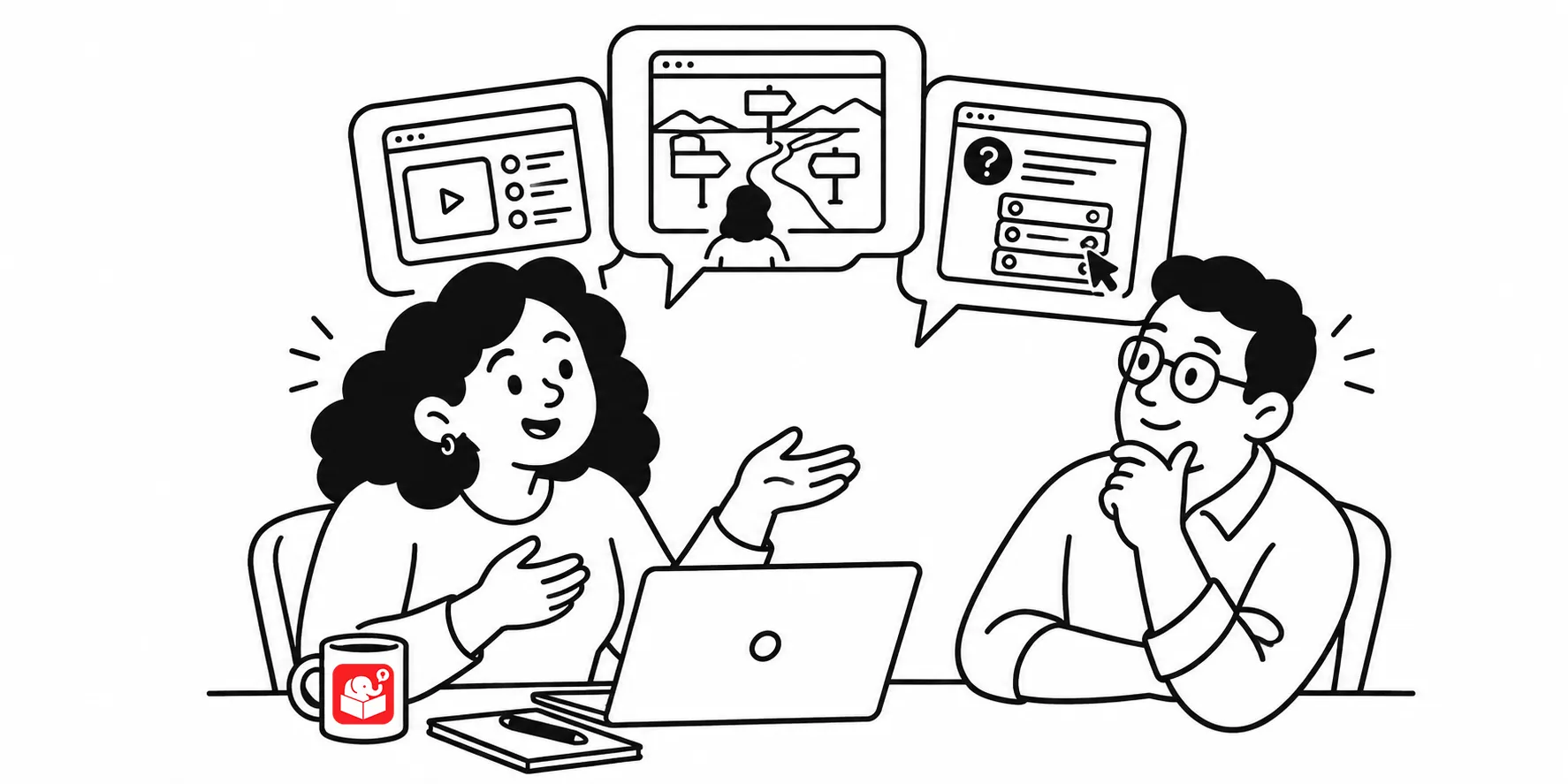
I spoke to someone recently who was trying to get her client to do more than the standard click-and-read elearning course. She was building a compliance course that lent itself to some interesting scenario-based activities but the customer would only accept the standard click-through approach. That’s a very common issue.
The challenge isn’t the content. I think there are two core issues: creating a linear explainer course is easy and it makes sense with well-structured content. And most customers are used to that format. That’s what they see when they take training and it’s what they expect e-learning to be. Getting them to consider a different approach can be a hard sell. Tight timelines and limited budgets make it even harder.
Before pitching anything, figure out what type of course you’re building. This is always my first step. Is the course focused on information? Or is the course focused on performance?
One type presents information but isn’t connect to specific behavior change. The other looks to close some sort of performance gap. Knowing which one you have shapes everything that comes next.
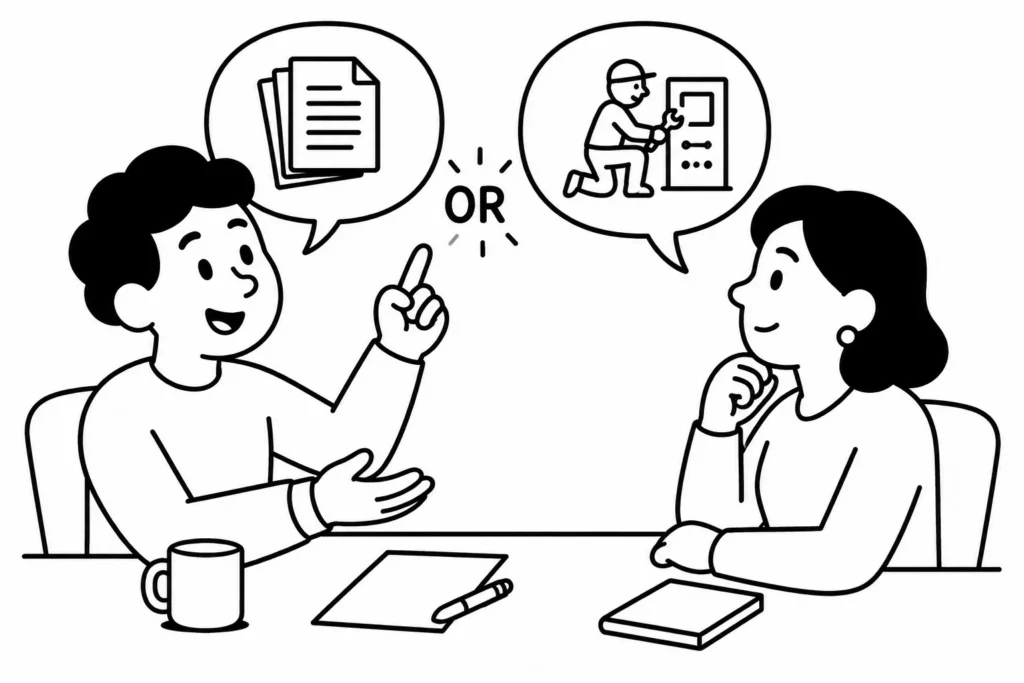
Safety training is a common compliance training. Most places I’ve worked have an annual refresher program. For the annual training, it’s more focused on certifying my understanding of the company policies and procedures. There’s no real peformance expectation. In that case, a linear course with a quiz may be appropriate.
However, if I worked in an environment where I needed to follow specific safety requirements like operating procedures or types of protective gear, then the assessment would be can I do what’s required? That’s something observable.
Explainer courses are simpler to build and tend to become the default. That’s fine when the course genuinely just needs to inform. But don’t let it become the default when performance is actually on the table.
Thus working with your client to clarify why they need a course and what they hope it accomplishes is the first step in building the right course.
I like to show examples of types of courses. I’d have three examples to show so they can see the difference. Build these demos using content the customer already recognizes. Seeing the same material handled three different ways makes the differences clear without requiring a long explanation.
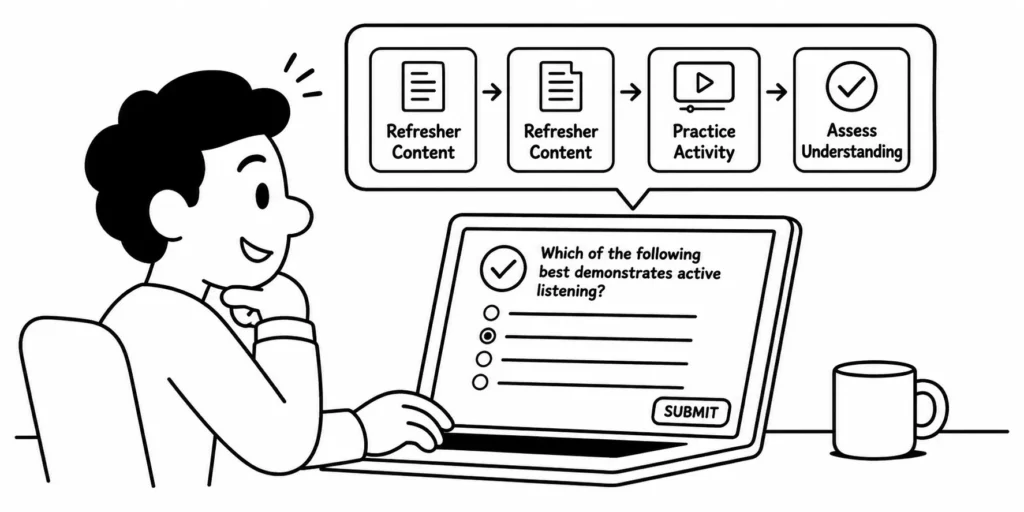
The first is a simple linear course: mostly content with a final quiz to certify completion. The second blends content with a practice activity that targets a relevant performance expectation. The third is decision-based, focused on the performance gap and built around activities where learners practice making the right choices.
The first level is basically a content dump. Here’s the information, read it, take a quiz at the end. The quiz just checks that you showed up and absorbed something. It’s fine for basic awareness training. It’s faster to build and costs less.
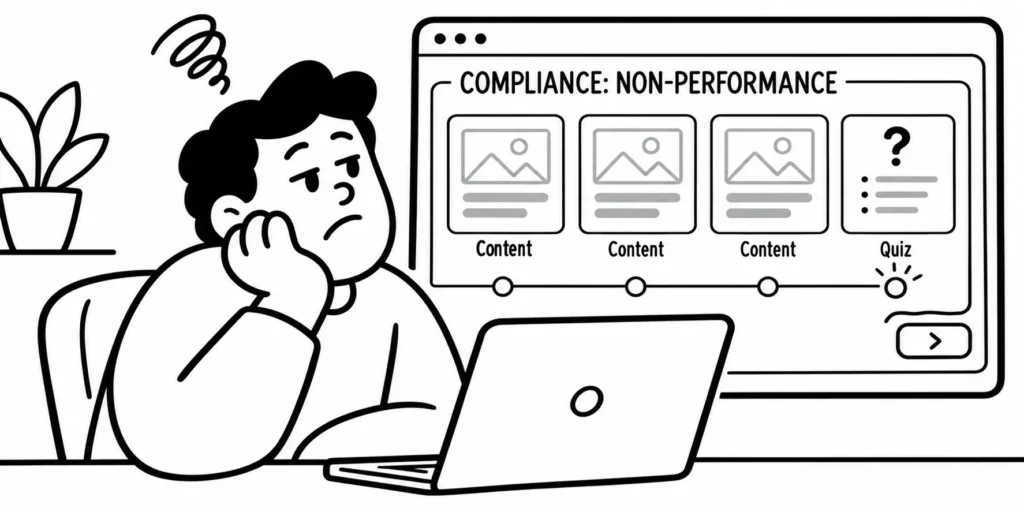
The second level mixes content with some simple practice. Compliance training often works this way. People mostly know the rules already. So you’re just refreshing their memory and then giving them a chance to apply it. Think “here’s a quick scenario, now show me you get it.”
The third level is where real performance goals come in. You start with a gap. Someone can’t do something they need to do. The training is built around decisions, not information. You’re not asking “do you know this?” You’re asking “can you make the right call when it matters?” That’s the version worth building.
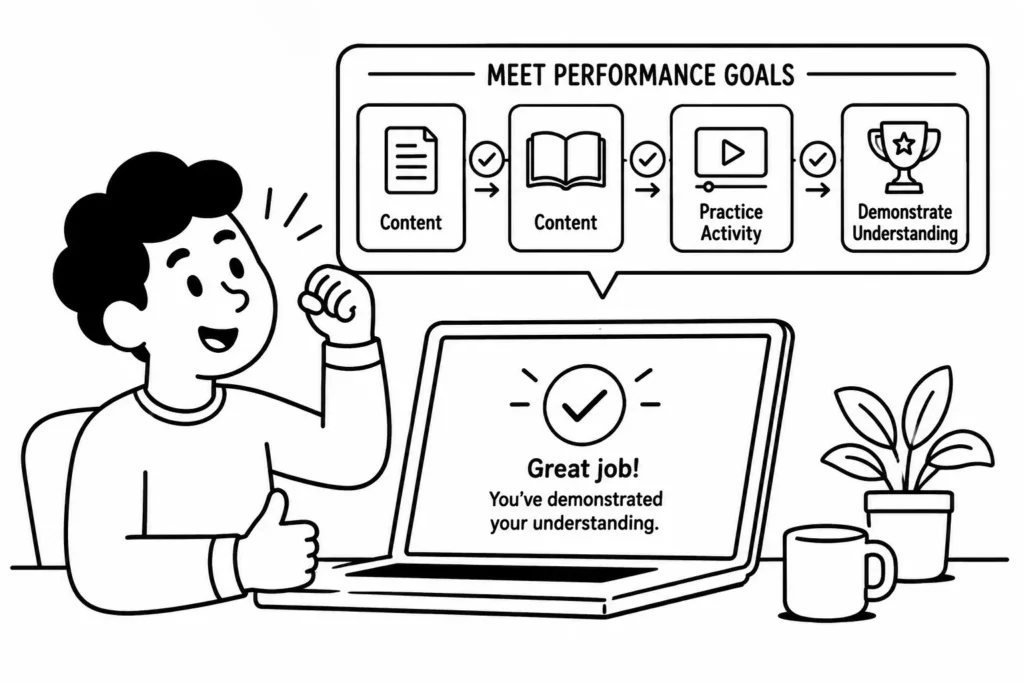
If the course is an explainer, keep it linear. If it’s a performance course, push toward decision-making activities. But don’t just let the customer choose without guidance.
Most customers gravitate toward the second option. It feels familiar, includes a little interactivity, and you can build it faster than a full decision-based course. That choice may be right. But it may not be. When you know the performance expectations and how success gets measured, you can guide the customer toward the right approach.
That’s your job as a performance consultant. The customer knows the content. You know how to build training that changes behavior. Bring that expertise into the conversation.
The real shift here is moving from order-taker to advisor. When you show customers three options and explain the reasoning behind each, you change the dynamic of every project conversation. Start building those demo courses now, before you need them.