Physical Address
304 North Cardinal St.
Dorchester Center, MA 02124
Physical Address
304 North Cardinal St.
Dorchester Center, MA 02124
Helpful ideas. Squeaky value.
Helpful ideas. Squeaky value.
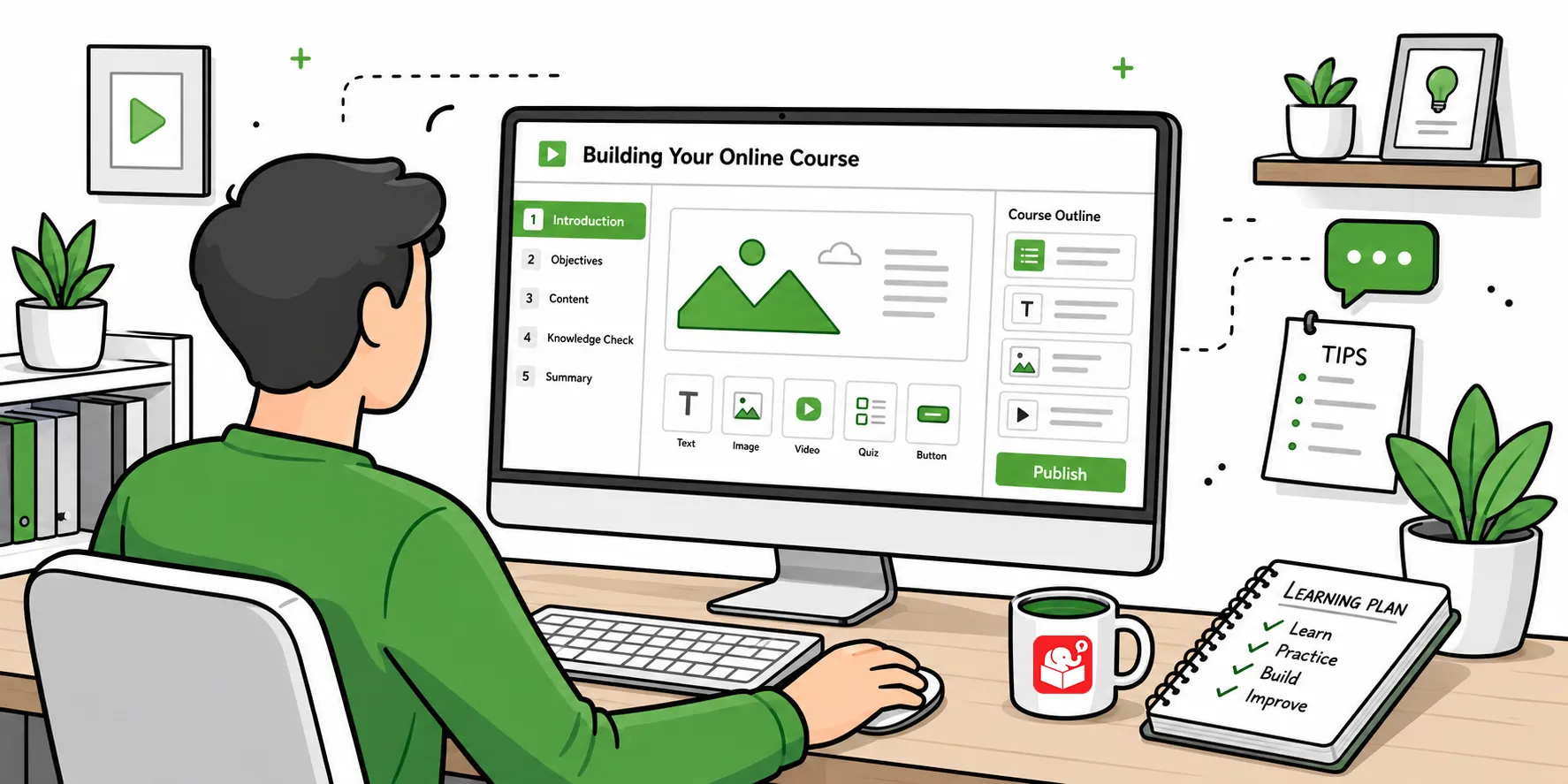
I came across one of my first e-learning courses a while back. My immediate thought was: how did anyone let me publish this? The good news is that reaction means you’ve grown.
Don’t expect to do all three well on your first project. The first course you build is not the best course you’ll ever build. That’s normal, and it’s also fine.
If you’re just getting started you may be in the same boat, that’s not a problem. Knowing what to focus on early makes the learning curve a lot shorter.
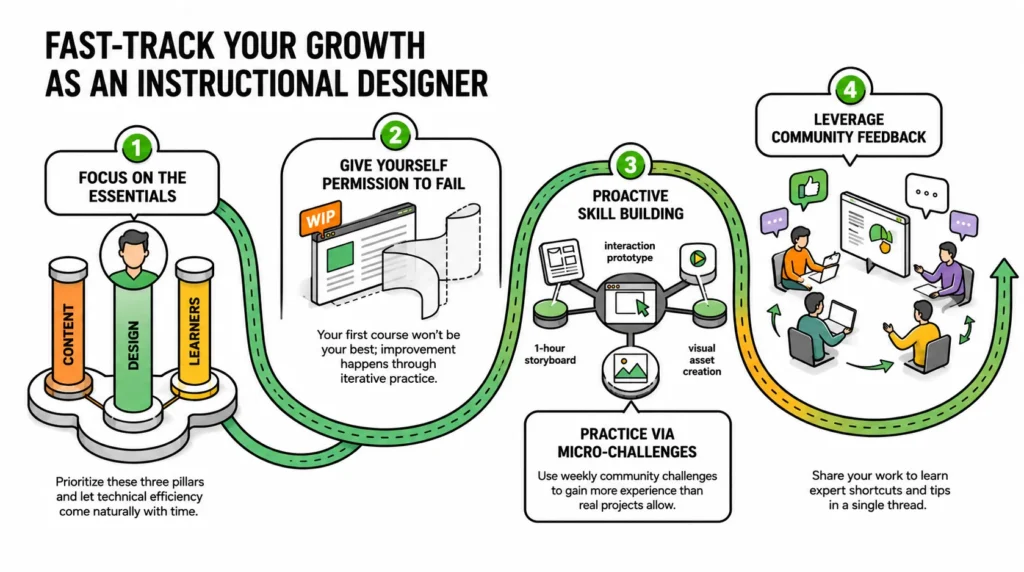
Without getting into the weeds with instructional design and how to implement it in your course design, let’s look at three main things worth your consideration:
Every course needs to do three things well. It should cover the right content. It should present that content clearly. And it should give learners something to do with what they just learned. Keep that framework in mind and you’ll spend your time in the right places.
Nobody builds a great course on their first try. It just doesn’t happen. And spending time worrying about that slows you down. When I do workshops people are always asking about best practices, but I think for those to work you need some context and experience. This helps you understand why it’s a best practice.
The first course won’t be perfect. The second will be a little better. That’s how it works.
When my son started playing soccer, I told him something about practice that stuck with me. If he only practiced during team scrimmages, he’d touch the ball for maybe three to six seconds at a time. At that rate, improvement was going to be slow. But if he practiced in the backyard every day, he’d get hundreds of touches and improve much faster.
The same thing happens with e-learning. On a real project, you’re under deadline pressure and you get limited chances to try new things. The solution is to practice the individual elements outside of real projects.
That’s one of the reasons why I like the weekly e-learning challenges in the Articulate community. They’re built to get you into the tools and to have fun ways to practice your skills. They’re small enough to finish without a big time commitment. Do them consistently and you’ll build skills faster than waiting for the next real project. Plus, you’ll get some cool ideas from other people’s challenges and probably start building portfolio pieces.
Here’s something nobody says out loud enough: there are twenty ways to build almost anything in e-learning. So there’s not always a best way. But sometimes there are more efficient ways. New developers often stress about finding the most efficient method. That stress is wasted energy.
If the course works and learners aren’t confused, you’ve done your job. It doesn’t matter what the source file looks like. Efficiency comes with experience, and the best teacher is having to fix something you built badly the first time.
The fastest way to get better is to ask for help from people who have been doing this longer. Jump into the community, show what you’re working on, and ask questions. Experienced developers will point you toward techniques that would have taken you months to find on your own.
I know this isn’t too deep and the tips are a bit scatered, but they’re good basic things to consider.
Getting good at building e-learning courses takes time, and the sooner you accept that the easier the process gets. Find small ways to practice outside of real projects. Don’t stress about efficiency before you have the experience to know what it looks like. Put yourself in places where you can learn from people further along. Every course you build will be better than the last.
If you want to improve faster, commit to one weekly practice activity and finish it. And if you’re stuck on efficiency, post your work in the community. You’ll get better feedback in one thread than months of working alone.