Physical Address
304 North Cardinal St.
Dorchester Center, MA 02124
Physical Address
304 North Cardinal St.
Dorchester Center, MA 02124
Helpful ideas. Squeaky value.
Helpful ideas. Squeaky value.
I’ve run into this a few times. A client calls and asks for an e-learning course on a compliance topic. What they describe is something simple, like a few screens of content, some knowledge checks in between, and a final quiz at the end.
This probably isn’t the most exciting project. But it’s the one the client wants and there’s a reason why.
Most people have taken dozens of e-learning courses over the years. The majority were probably linear, text-heavy, click-through experiences. So when clients picture “e-learning,” that’s the template in their head.
To be honest, while it’s not a sexy approach, this may be appropriate for a lot of standard compliance or explainer training.
However, this does create a problem when they’re actually trying to change behavior or build new skills. A click-and-read format is fine to communicate information, but it doesn’t do much to help learners learn and practice new skills.
If you just build what your client describes, you might miss the real goal. The challenge is getting them to see the course from a different perspective.
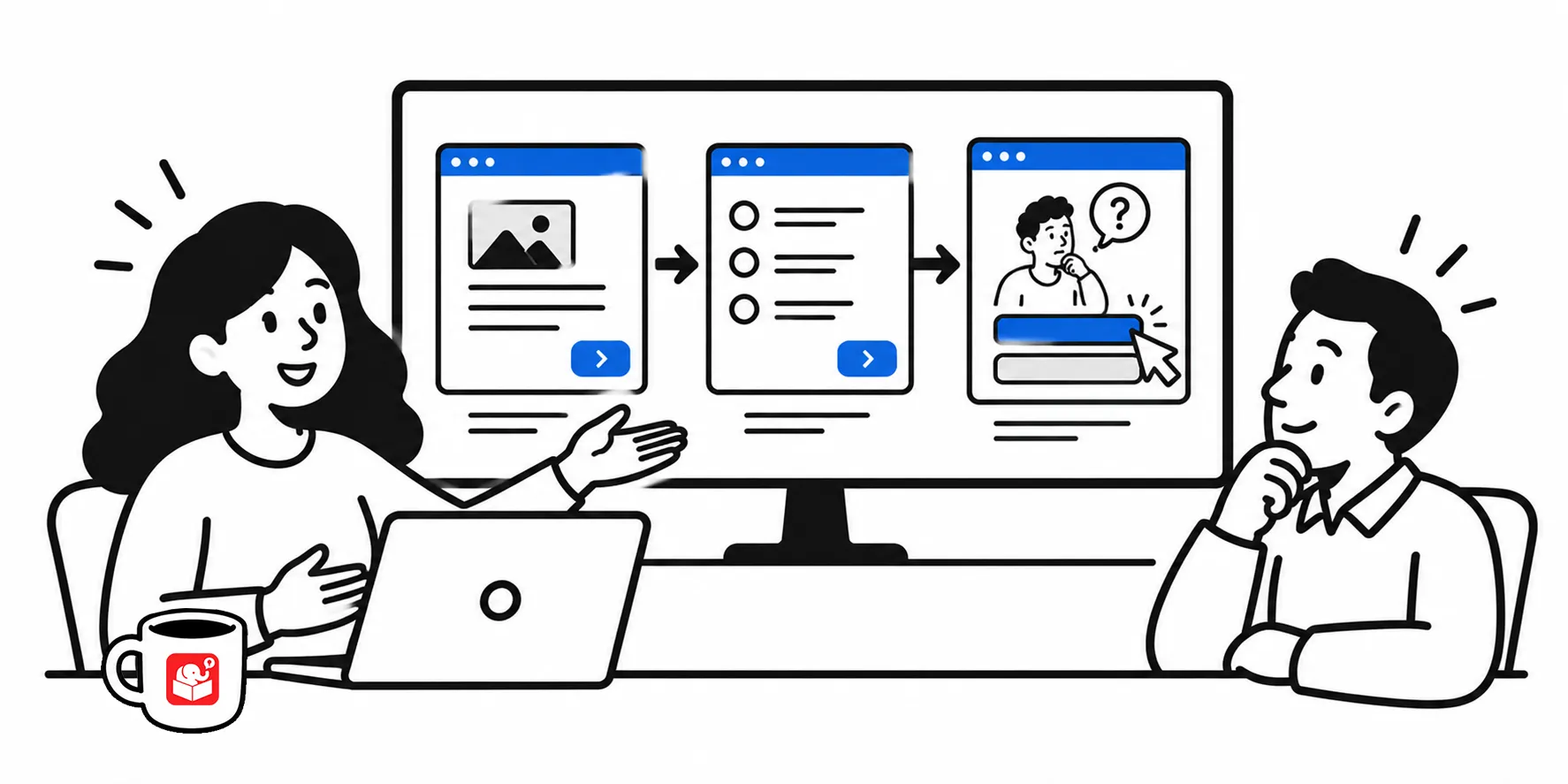
The solution is to show examples before you have the design conversation. Find two or three short samples that represent different approaches: a linear course, a hybrid with mostly linear content and scenario-based interactivity, and something with decision-based branching.
Let the client click through each one so they can experience the content in a different way. They’ve all taken boring courses, they’ll get it when they see it.
This does a few things. It gives them a vocabulary for talking about what they want. It also helps you spot where their goals and their initial request don’t match up. That conversation is much easier to have early than after you’ve built something.
Once a client can see the difference between course types, the scope conversation changes. They start asking better questions. They understand why a performance-based approach might take longer but deliver better results.
This matters especially when budgets and timelines are tight. A client who understands the trade-offs can make a real decision about where to invest. One who can only picture screens of bullet points and quiz questions, will say yes to slides, even if that’s not what the training needs.
Showing examples before designing is one of the most reliable ways to improve both client relationships and course outcomes. The better question to ask yourself going forward: what’s your current library of example courses? If you don’t have a few short demos showing different approaches, that’s worth building before your next client kickoff.