Physical Address
304 North Cardinal St.
Dorchester Center, MA 02124
Physical Address
304 North Cardinal St.
Dorchester Center, MA 02124
Helpful ideas. Squeaky value.
Helpful ideas. Squeaky value.
I once worked at a bank and was tasked to do training for the lending group, so I wanted to meet with them to understand their jobs and how the training helped. The senior managers thought it was a waste of time because the learners had no control over the content requirements.
Organizations want training and they want it fast. Then they roll it out with little regard to how the learners will recieve it. A manager or subject matter expert defines what goes in, based on what they think the job requires. The people who actually do the work rarely get a seat at that table.
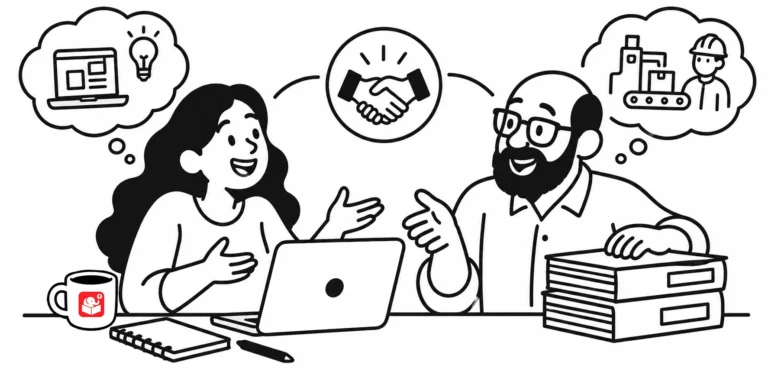
The client gives you the content and the learning objectives. Your job is to figure out which content matters and how to shape a learning experience around it. Talking to learners directly is one of the fastest ways to do that.
Create a small pilot group. Doesn’t need to be a lot of people. Share the content and objectives with them. Ask them what’s most relevant to their day. Ask how they’d organize the training if it were up to them.
Those conversations give you something a SME often can’t: real use cases. Learners will often hand you examples that work perfectly as scenarios or simulations. Keep in mind that their priorities won’t always match the organization’s.
Regulatory requirements exist for reasons that aren’t always visible at the job level. So the learners may ignore those. The point is to add a perspective, not replace the client’s.
Course content often misses the nuances of how work actually happens. Sitting with learners and watching them perform in a real environment reveals things the content never will.
I once built training for a production facility where new hires had to operate large, complex machines. After spending time on the floor, I noticed that many were intimidated by the equipment. That intimidation made it harder to learn anything.
We responded by redesigning the early part of the training. Instead of starting with the obvious approach on operating the machine, we focused on machine components and preventive maintenance. The goal was to get their hands on the machines and build familiarity with them so they weren’t intimidated. Those learners outperformed groups who didn’t go through that section.
We wouldn’t have designed it that way without time on the floor. The content alone pointed somewhere else entirely.
You don’t need a polished course to test a concept. Build a rough sketch of how the course would work and share it with learners. It doesn’t matter if it’s made in PowerPoint with stick figures. I like to build quick interactions in Storyline. The goal is to expose problems before they’re expensive to fix.
Today the tools make this even faster. A few photos, a handful of slides, and some hyperlinks can sketch an interactive scenario in minutes. Rough prototypes also help clients see what they actually want instead of describing it in abstract terms.
Sometimes access to learners just isn’t available. As I mentioned above, I was building training for loan officers at a bank. When I asked to spend time with some of them, the organization said no.
If that happens, don’t launch without at least a small pilot. Have a few end-users take the course before it goes live. Watch how they navigate it if you can. You’ll surface experience issues, confusing instructions, and gaps that aren’t visible from a development seat.
Even one person going through the course will tell you something useful. Getting feedback before launch is worth whatever it takes to arrange it.
The training that gets used is the training that feels relevant. Learners can tell when a course was built around content rather than around them. Bringing even one real learner into your process, at any stage, gives you information no SME briefing can replace.