Physical Address
304 North Cardinal St.
Dorchester Center, MA 02124
Physical Address
304 North Cardinal St.
Dorchester Center, MA 02124
Helpful ideas. Squeaky value.
Helpful ideas. Squeaky value.
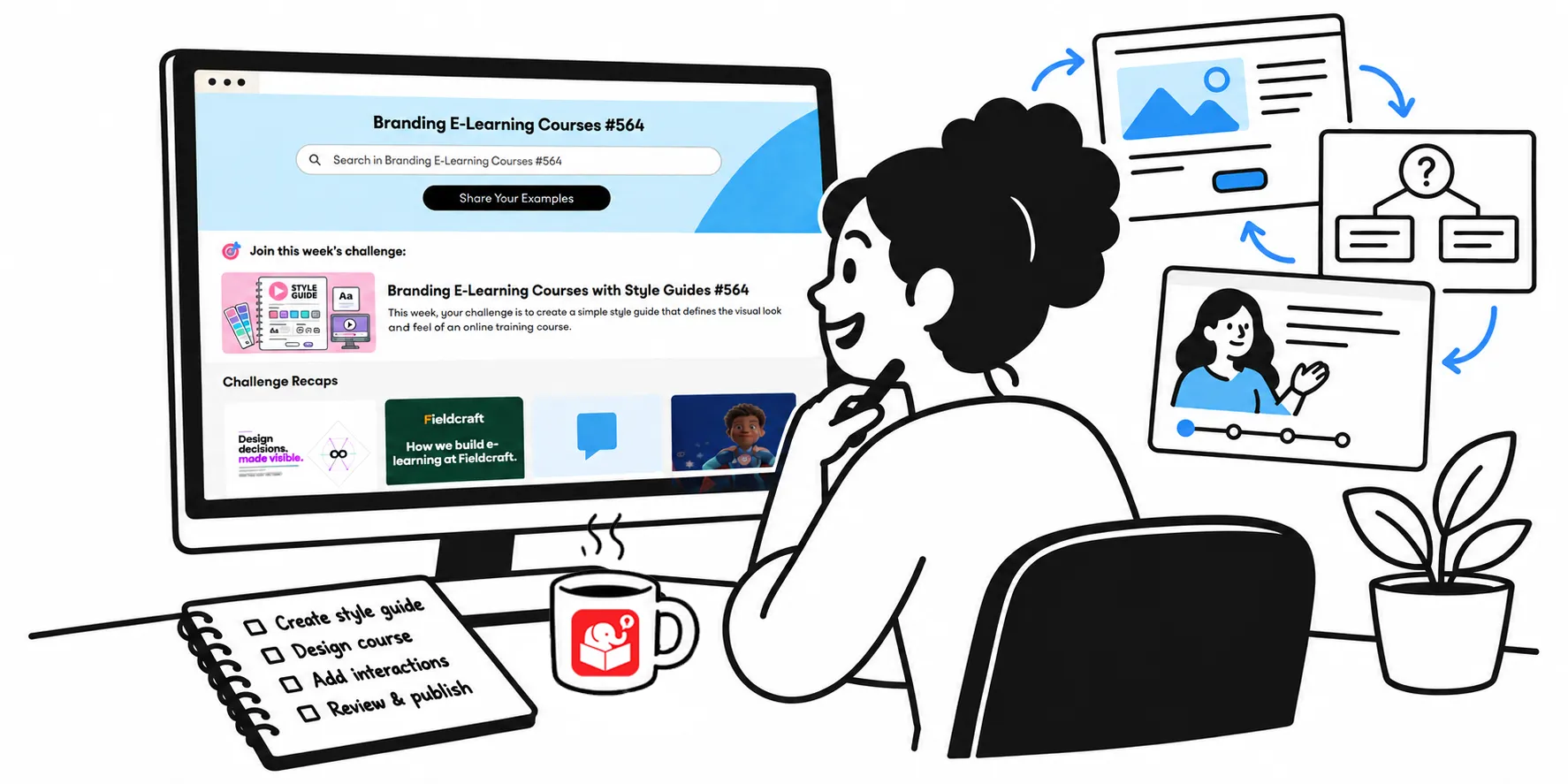
A lot of e-learning designers are figuring it out as they go. Since many came to the training industry and then e-learning as subject matter experts, they often lack formal training, have limited resources, and work without much support. Because of this, one of the fastest ways to grow is to study what others have built and stay connected to a community of peers.
The e-learning community shares a lot. Other designers post examples, templates, and demos all the time. I think the e-learning challenges is one of the best places to see smaller, bite-sized modules to get ideas and inspiration.
Studying those examples is one of the best ways to pick up new design ideas and production techniques. The goal isn’t to copy. It’s to see what’s possible and then apply those ideas in your own work.
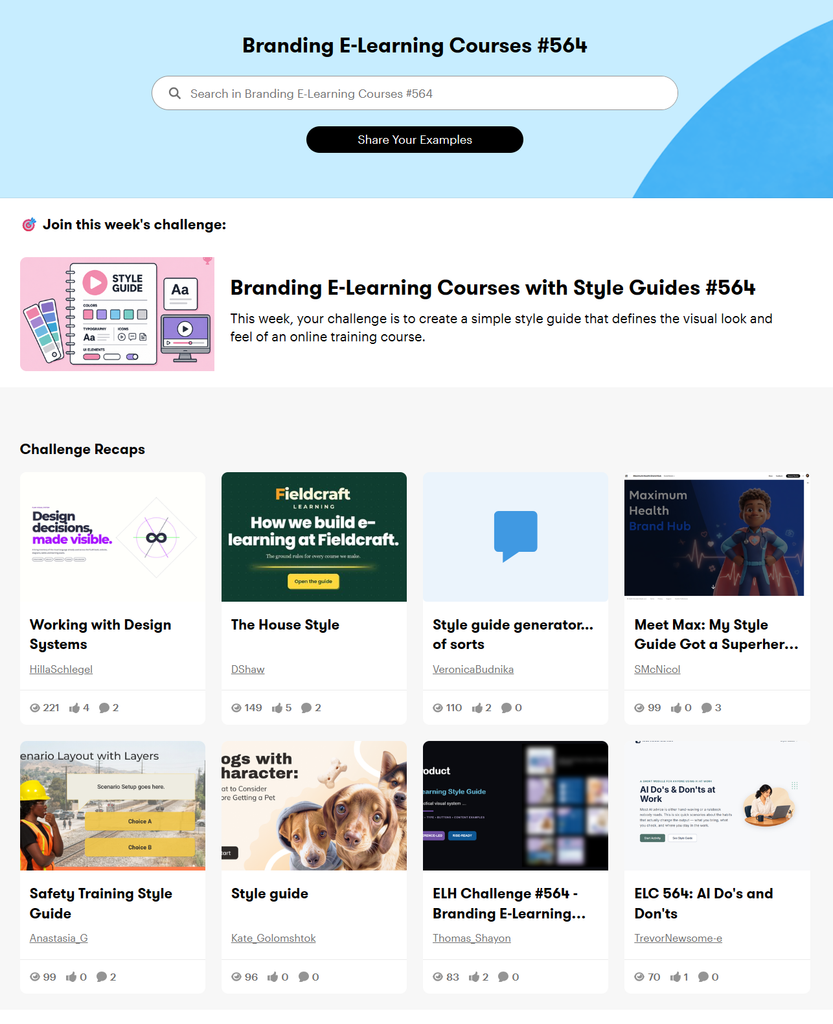
When you look at examples from other designers, a few patterns tend to stand out. Here are some things worth paying attention to:
Studying examples gets you inspired. But the deeper growth happens when you show up consistently and contribute. Communities of practice are built on sharing. The more you give, the more you grow.
Being active doesn’t mean being everywhere. It can be as simple as answering forum questions, sharing a template, or blogging about a recent project. Designers who do this consistently build real credibility over time. They also tend to learn more than they expected from the act of explaining what they know.
Writing is one of the most underrated ways to build expertise. You don’t need a polished blog or a big audience. Pick a tool you use, a problem you solved, or a technique you tried recently. Write about it. The act of putting your thinking into words is what solidifies it.
Sharing templates, examples, or process notes helps the whole community move forward. Other designers are working under the same constraints you are. Any help you offer is appreciated. And when you’re the one sharing, you’re the one people think of when an opportunity comes up.
Inspiration and community aren’t shortcuts. They’re how most working e-learning designers actually grow. As you build your skills, commit to studying what others have made and showing up in those same communities.