Physical Address
304 North Cardinal St.
Dorchester Center, MA 02124
Physical Address
304 North Cardinal St.
Dorchester Center, MA 02124
Helpful ideas. Squeaky value.
Helpful ideas. Squeaky value.
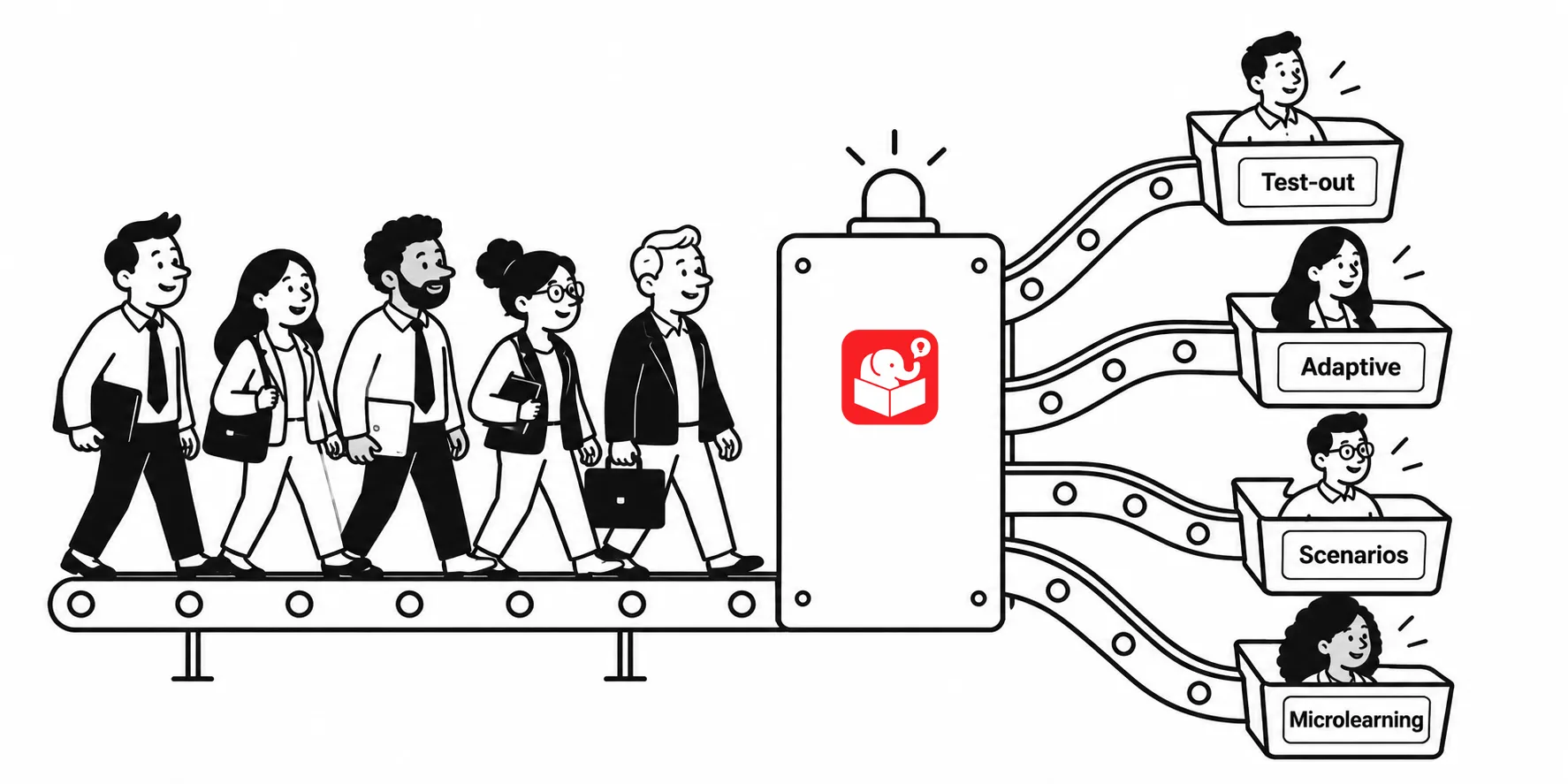
Most organizations build a single course for the entire learning audience. This makes sense especially when dealing with limited resources and the complexity of trying to manage different types of course for different types of learners.
But not all learners come to the course with the same experience and expectations. Here’s a way to recognize that reality and rethink how you put together the training program to meet different needs and skill levels.
Learners bring different levels of knowledge, motivation, and urgency to a course. Understanding the range helps you design for the full group rather than one imagined ideal learner. Here are six types that show up in nearly every audience.
The good news is that online training can accommodate multiple learner types in a single course. You don’t need six separate versions. A few strategic design choices go a long way.
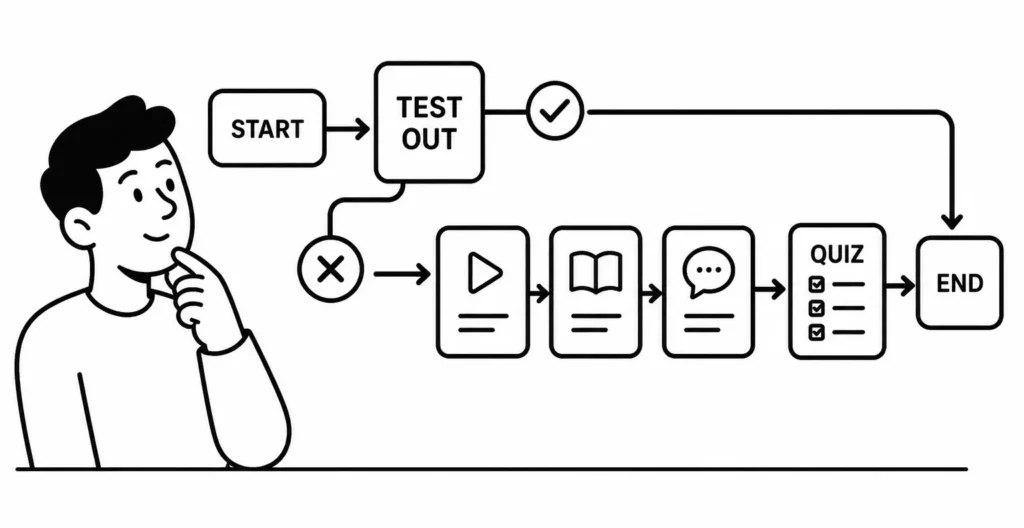
If the goal is demonstrating understanding, give learners a chance to prove it upfront. A pre-test that gates the full course respects the time of those who already know the material. Those who don’t pass get a clear signal about where to focus.
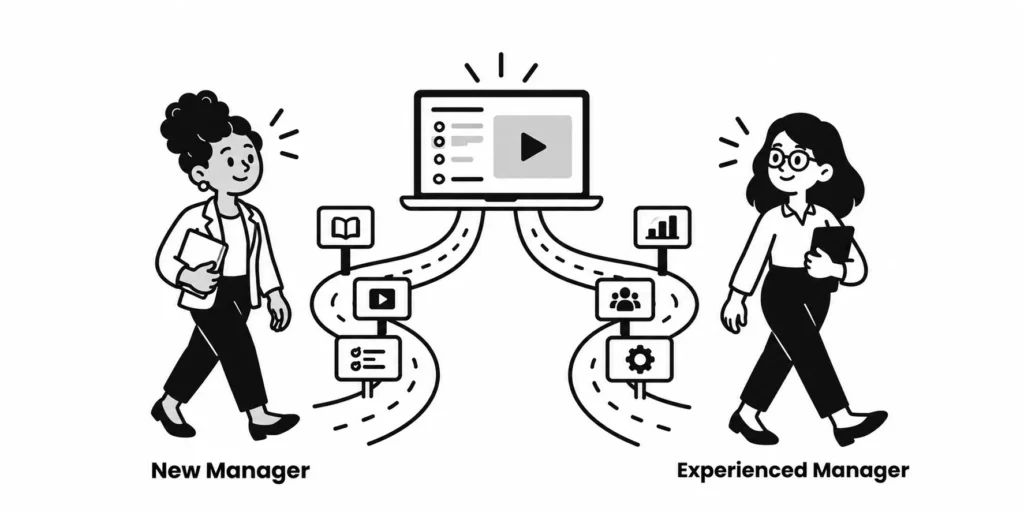
Not everyone needs the same route through a course. An experienced employee has different needs than someone in their first week. Branching based on role, experience, or quiz performance lets you send each learner somewhere relevant.
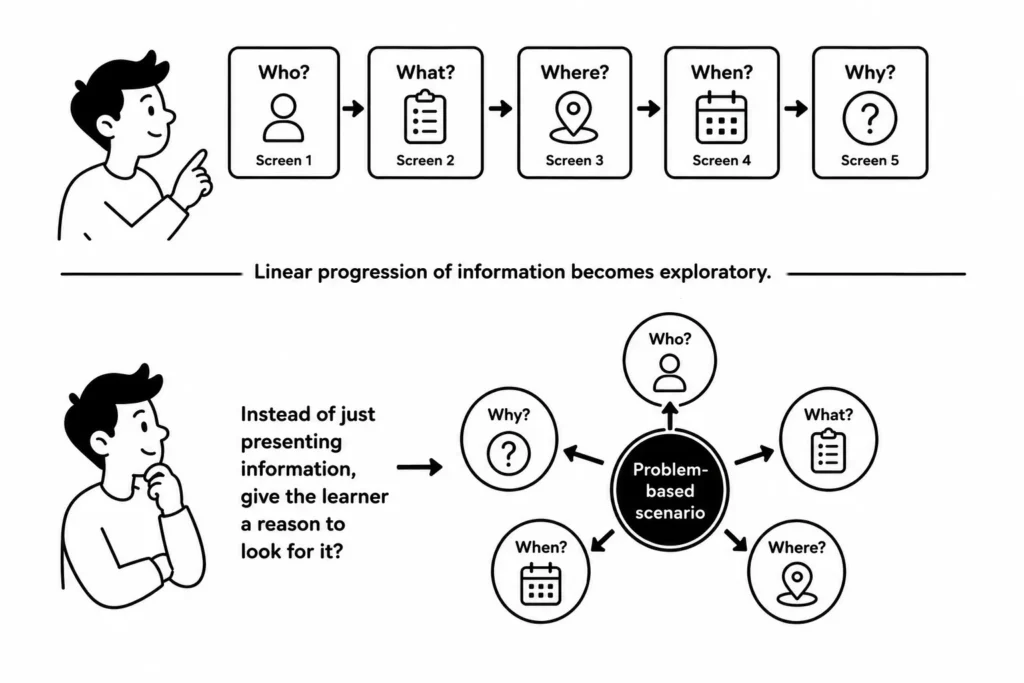
Packaging content inside a realistic situation serves multiple learner types at once. Experienced learners see how familiar material applies to real work. Curious learners get to explore what happens if they choose differently. Mandatory learners at least have something to do besides read and click.
Long courses feel like commitments. Short, focused modules feel manageable. They’re also easier to recombine for different audiences and simpler to update when content changes. And they have the benefit of being spaced out over time rather than delivered as a single learning experience.
When you design your next course, spend a few minutes thinking about who’s actually going to take it. Not just the role title, but the real range of experience, motivation, and context sitting behind it. That awareness changes decisions about navigation, content depth, and scenario design.