Physical Address
304 North Cardinal St.
Dorchester Center, MA 02124
Physical Address
304 North Cardinal St.
Dorchester Center, MA 02124
Helpful ideas. Squeaky value.
Helpful ideas. Squeaky value.
Most organizations treat the e-learning course like the training program. It isn't. People learn all year long, through experience, peers, managers, and yes, the occasional course. Here's how to think about where e-learning fits in that larger picture.
Most e-learning pushes content and calls it training, even when nobody can demonstrate anything different afterward. Here's why content alone isn't a course, and how to push back when someone hands you a slide deck and asks you to turn it into one.
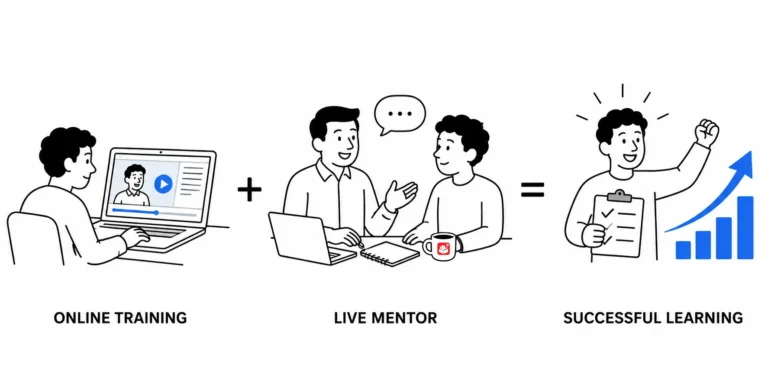
A new employee can absorb theory from a course, but real competence comes from doing the work. Pairing e-learning with peer coaching gives you a complete training system. A learning journal is the tool that connects both.
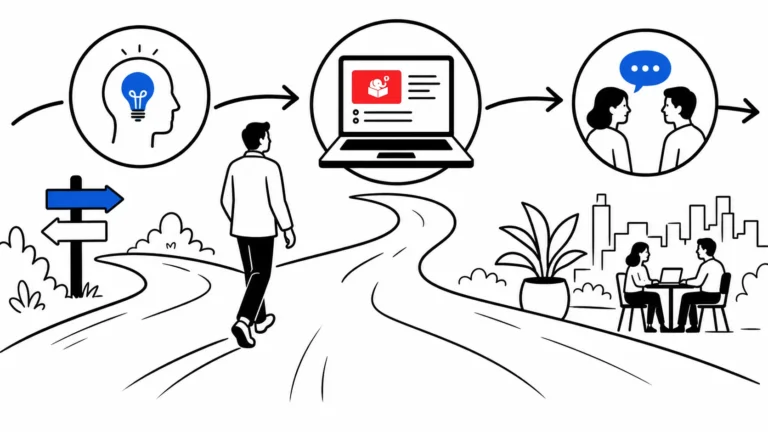
Most e-learning courses treat the course as the finish line. But learning happens before and after the course, too. Here's how to think about all three phases so your course actually produces results.
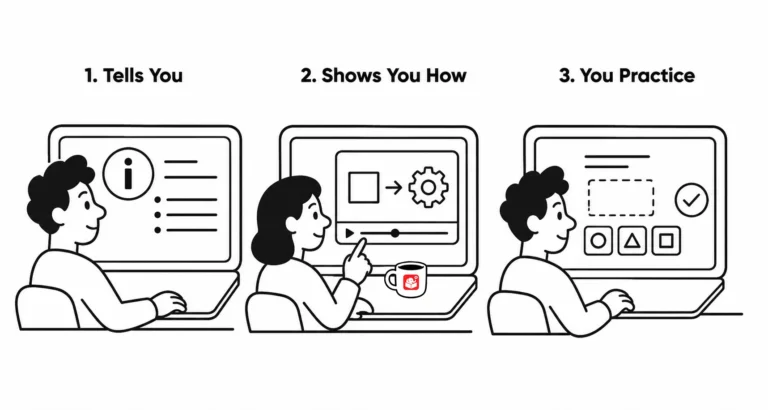
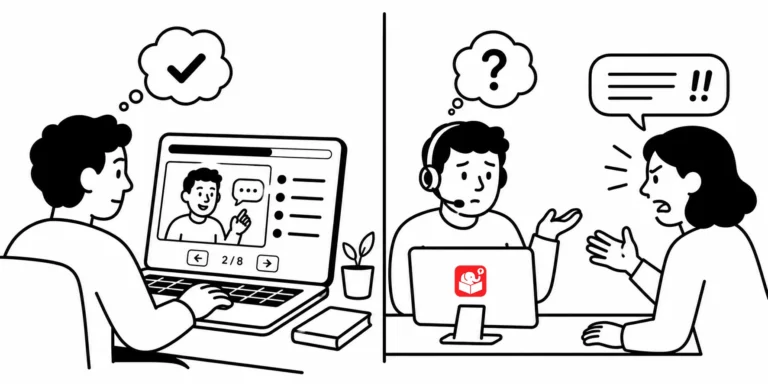
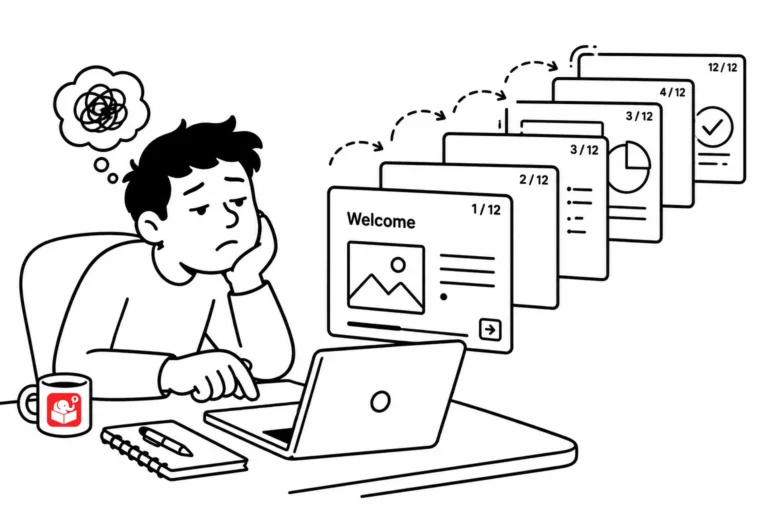
Here’s a common scenario: you’re ten minutes into an e-learning course. You’ve clicked through eight slides. Yet, you have no idea what you’re supposed to do differently when you’re done. The reason this happens is because most courses are explainer…
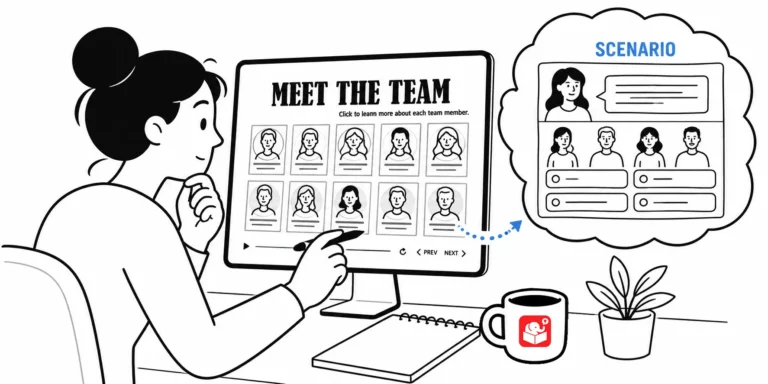
Most e-learning developers avoid gamification because it feels too complex to build quickly. But you can take a template you already have and add just a few interactive elements to change the experience entirely. Here's how a simple meet-the-team template became a decision-making challenge.
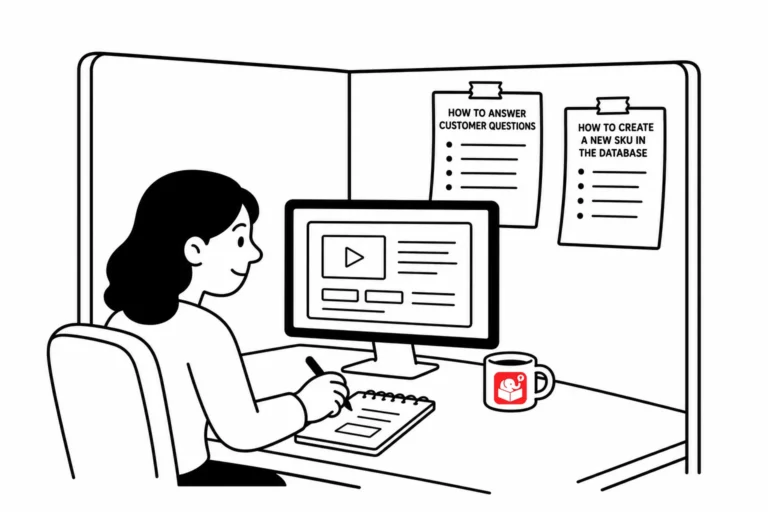
Employees kept building their own cheat sheets that did more good than months of formal training. Here's what that says about how much content actually belongs in a course, and a simple test to figure out what to keep.
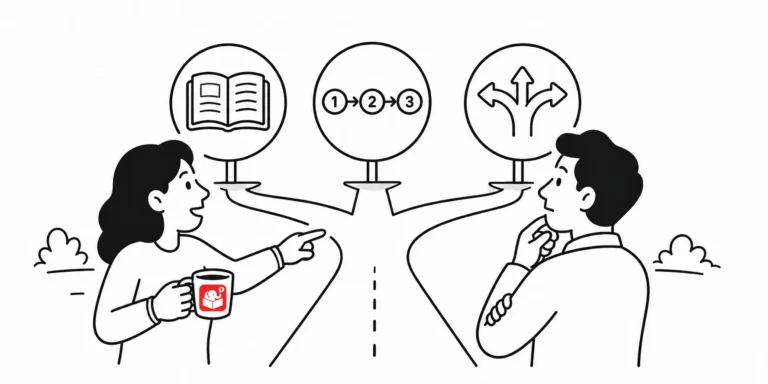
Not every course needs the same kind of design, and building the wrong type wastes time on both ends. Here's how to tell explainer, step-by-step, and principle-based courses apart, and why asking one question upfront makes the rest of the project easier.
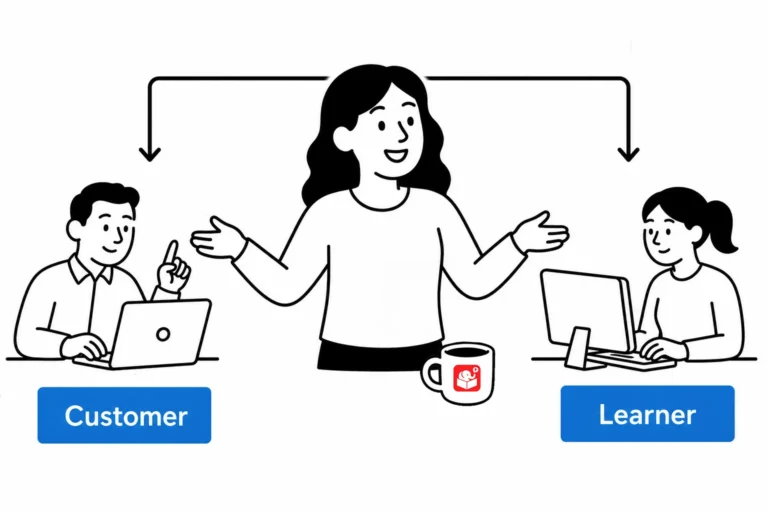
Most compliance courses feel pointless to the learner, even when the content matters. Here are three ways to frame that same content in a context people actually relate to, so it lands instead of getting tuned out.
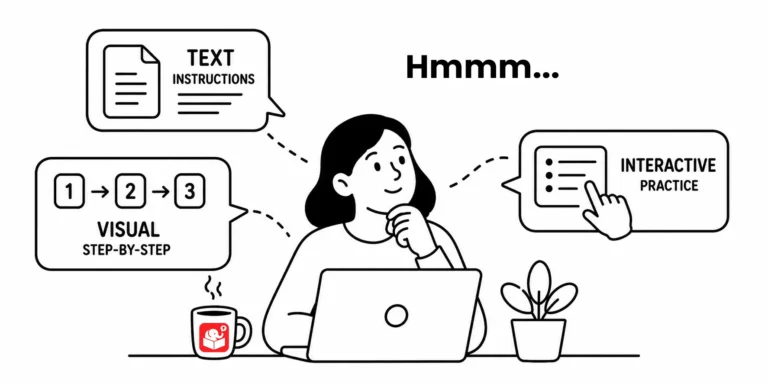
Some learners need explicit instructions. Others just want to jump in and figure it out. Here's how to decide whether to front-load instructions, deliver them at the point of need, or build them into a practice activity, and how that choice depends on your audience.
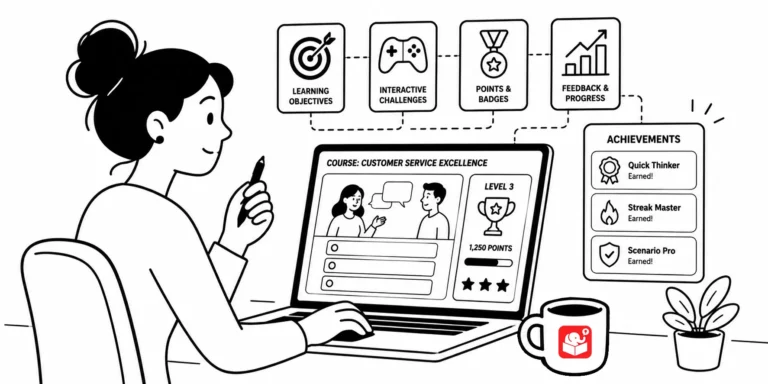
Gamification isn't just building a Jeopardy game. It's using game concepts like points, progress, and rewards to change how learners feel about a course, not just review facts at the end. Here's where to start, what you can build with variables, and a few examples to get your gears turning.
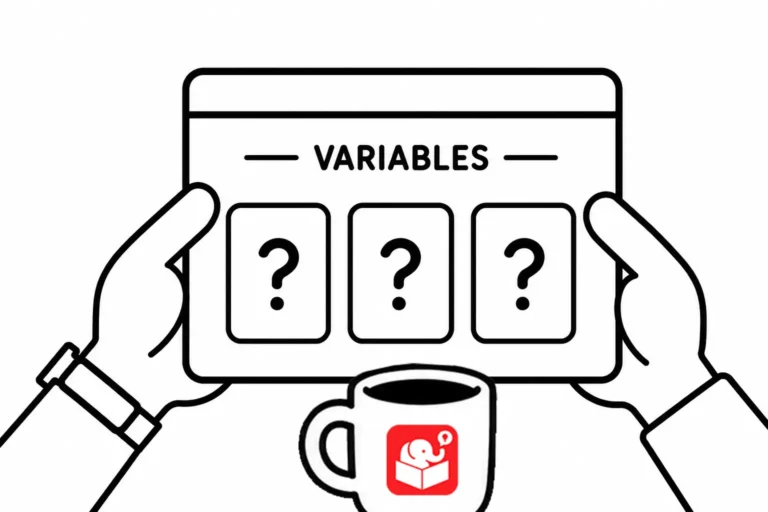
Most course authors build linear slides and stop there. Variables let you collect learner input, evaluate decisions, and send learners down different paths. They're not as complicated as they sound, and this post shows you where to begin.

Here's an excerpt:
Learners can feel just as lost starting a new course as you do navigating a foreign train station. Here's how to set clear expectations, provide an orientation, and keep the experience consistent so your learners feel comfortable from the start.
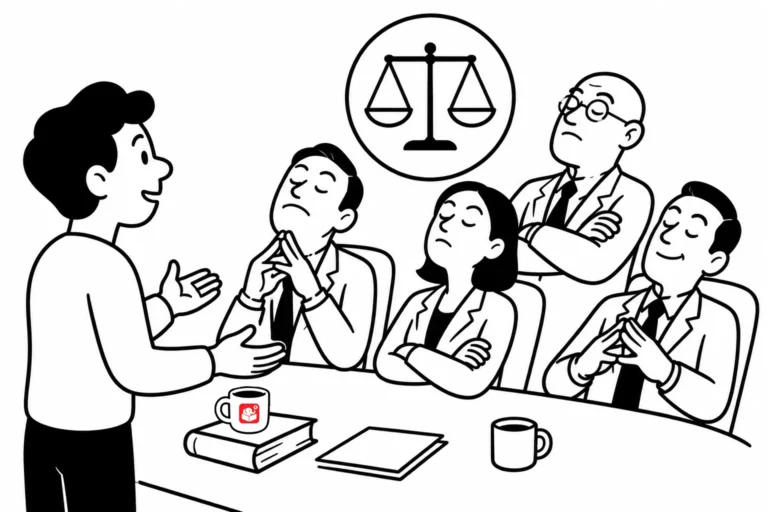
Most compliance training is designed around assumptions about what regulations require, not what the regulations actually say. Here's how to build something better.

Last week I had a kidney infection that almost put me out for good. Stuck in bed with nothing to do but think, I reflected on three things about how people learn. They changed how I approach every course I build.