Physical Address
304 North Cardinal St.
Dorchester Center, MA 02124
Physical Address
304 North Cardinal St.
Dorchester Center, MA 02124
Helpful ideas. Squeaky value.
Helpful ideas. Squeaky value.


Flipping the usual course structure sounds counterintuitive. But when you start with an activity instead of content, learners arrive at the instruction already engaged and aware of what they don't know. The HAT model makes that shift practical.

Most e-learning doesn't live up to the hype. Not because the tools are wrong, but because internal teams are often set up to build the wrong kinds of courses. Understanding why helps you start changing it.

You can build a course with well-organized content, clean navigation, and solid visuals, and still end up with something that doesn't stick. These three principles address why that happens.

I hear "make it more interactive" constantly. But no one ever defines what that means. Once you understand the three main ways a course can be interactive, you can make smarter decisions about where to invest your development time.

A common pattern in e-learning is to list what people need to know and then quiz them on it. That approach measures recall, not understanding. Four design changes can close that gap.

Some courses need learners to prove they can do something. Others just need to build awareness. Here's a simple framework for figuring out which one you're building, and how to write objectives that actually match.

A good SME relationship pays off long after the project ends. This roundup of tips from other e-learning developers covers how to respect their time, earn their trust, and keep the door open for next time.

Real-world content can actually work against your course. Here's why flipping the scenario, even into something as odd as an alien abduction, keeps learners focused on the objective instead of the details they already know.
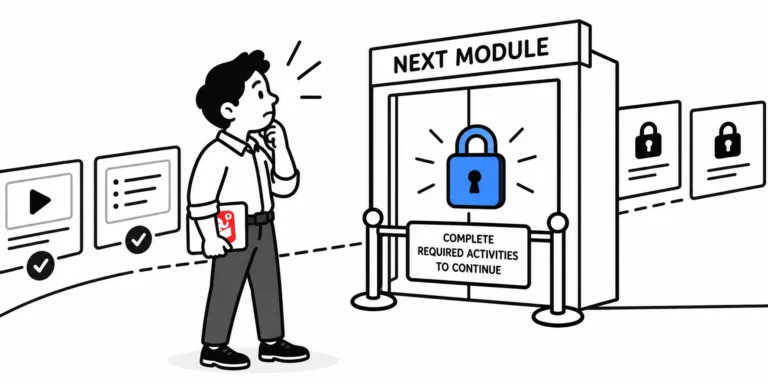
"We have to lock the course or people will just skip to the end." Sound familiar? Locking navigation is a common default in e-learning, but it solves the wrong problem. This post explains why, and what to do instead.

A training request doesn't automatically call for an e-learning course. Many of them can be handled faster and cheaper with something else. Four questions will help you figure out which approach fits.